The problem is theory can be detrimental to real world practice. You may not know how to properly integrate the knowledge you have with what are you trying to learn.
That's not really true, or is at least unclear. The FAA allows time logged in approved simulators to be counted toward an instrument rating, for instance, up to a limit.
The US Army make use of simulators when training their helicopter pilots, as it enables their trainees to meet test standards with fewer hours spent in real aircraft. [0]
Except that not every hour is the same. Flying straight and level following a GPS track with no relevant weather or traffic anywhere near accumulates a different kind of experience than other kinds of situations (bad weather, complex airspace, other traffic, ...).
Number of landings is probably more relevant for survival.
If you don't understand why that's bad, look up the 2009 crash of Air France 447, when a pilot made an error that should have been impossible to make with any kind of flight training and killed 228 people.
That pilot pulled back constantly on the stick, costing him speed, eventually stalling the plane. He kept pulling back on the stick as the plane fell like a rock despite maximum thrust. He actually overrode the input of the other pilot that tried to pitch down to regain speed and recover from the stall. By the time the captain showed up and diagnosed the situation, they no longer had the altitude to trade for the necessary speed to recover.
Look I'm no expert but even Ace Combat taught me not to do that. To say nothing of simulators where you actually learn concepts like energy management. Planes are not rockets.
Wow that's a tragic story, and it's rather maddening that the junior pilot didn't properly hand over the steering when asked to. 3 minutes of bad decision making and panicking.. ouch.
While he did do this, the UX of the plane was just asking for disaster. Averaging the inputs of the two sticks when they disagree is an... interesting decision, and the fact that the stall warning could go off when they had stall prevention on, desensitizing pilots to the warning when it was actually warranted, was a disaster as well.
A worryingly similar incident happened last year (AF011) on a Boeing 777, where two Air France pilots were fighting each others’ yoke inputs.
Not to say the Airbus UX isn’t a problem, but one of the most basic things in dual pilot flying is being explicit about who has the controls. Once that basic level of situational awareness is lost, it’s going to be hard to maintain control.
Certainly, by the time you are piloting for Air France, you'll have had so much training and experience that whether you used a flight simulator before getting your first pilot's license is irrelevant.
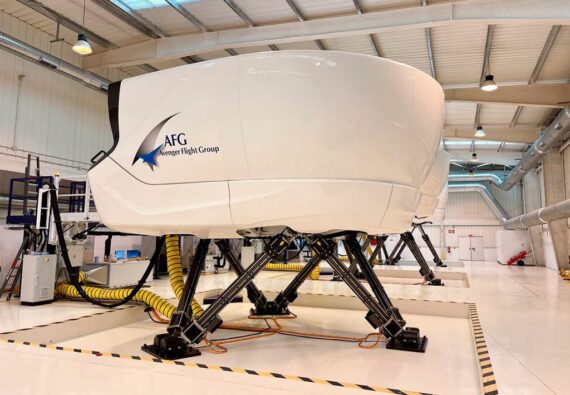
Not to mention that the flight simulators for large passenger aircraft are far more advanced than anything you can buy as a consumer, let alone download to a PC. Their physics simulations are advanced enough to use in crash investigations to simulate possible failure scenarios. Their use in training airline pilots is mandatory, not detrimental.
It costs at least $1.5 million. It's ~150x cheaper than the plane and since zero lives at risk, US airline pilots are required to train emergencies in simulators while being accessed by an examiner every six months (IIRC).
For general aviation though, nothing that powerful is available, but you can log training hours on an FAA-certified simulator running the pro version of X-plane.
I’m fairly certain most of the cost there is in the machinery. The software should be more or less comparable (there’s no reason for it not to be anyway).
> I’m fairly certain most of the cost there is in the machinery.
Why are you so certain?
While the hardware isn't exactly cheap, neither is the software. Gathering feedback from a bunch of pilots and incorporating it into the simulator isn't cheap. Renting out an A330 and a couple of pilots to run experimental validation isn't cheap - it costs >$50k an hour and you'll need hundreds if not thousands of hours. Validating each software release isn't cheap.
*> The software should be more or less comparable (there’s no reason for it not to be anyway).
I'm working on second hand info but AFAIK it takes over a dozen modern networked server systems to provide the fidelity the simulators need (with multiple GPUs no less). The software isn't comparable simply because a consumer machine isn't powerful enough to run the real stuff and the quality of the simulators has absolutely sky rocketed in the last 20 years. The've been constantly upgraded to the point that a 747 simulator now costs more than the plane itself.