For context, the original intention was that states would run their own exchanges, only if they refused would residents of the state use the federal exchange.
36 states initially did not set up their own exchanges.[0]
It appears that currently, 20 states (including D.C.) have their own marketplace.[1]
>The shutdown prevented anyone from outside the main team working on HealthCare.gov from coming in to help
That government shutdown in 2013 was instigated entirely by one U.S. Senator, Ted Cruz, expressly for the purpose of sabotaging ACA.[2]
If I was running a state agency and the federal government told me I could just use their system instead of spending my own money I would definitely take on the federal government instead of paying for it. Sometimes the whole "states are their own thing" here in the US goes way too far.
Would you also take federal money to expand medicaid coverage to the poor citizens of your state?
If so you might not be qualified to be a republican governor.
Wouldn't it be much better to hire your friends as IT consultants, make broken systems as confusing as possible, and continuously change the rules, and then starve the half-assed system of funding in an attempt to keep people from signing up for coverage at all? What makes this plan doubly republican-friendly is that all players are your donors and most victims are minorities.
I can disagree with Republican cronyism and the endless "let some private contractor do it poorly" when the Federal government could just do it directly, and poorly, but with less indirection.
… I can also disagree with blue state's NIMBYism, "I got mine and screw you" attitudes towards housing, and work to promote things like better zoning laws, fairer tax legislation, better public transit, etc. at the same time.
(Note: the parent edited the above comment to add the CNN article. At the time I replied, it was only the NYT link.)
Where did I say that? I was responding to the ill-informed rant about state-govt websites and corruption while hilariously ignoring the article stems from corruption and issues in the original healthcare.gov website.
if you weren't addressing my point (medicaid expansion) then why are you responding with random articles?
I, in fact, think things like negotiating drug prices is good, sadly it was outlawed by republican policy: Medicaid Part D (One of the most expensive policies ever) -- the Biden "Inflation Reduction Act" addresses this Bush-era money-grab for drug companies.
I will still give Bush immense credit for passing Part D, even if it blew a hole in the federal budget - there is no way politically it would be possible today, and it was almost not possible then.
Providing lower-cost ways of providing health care is directly contrary to the interests of anyone with political or economic power in our country: the hospitals and pharmaceutical companies that directly benefit from high prices, the politicians who receive bribes in exchange for passing laws that keeps prices high (or just failing to pass laws that would lower prices), and the typical employer who can use the increasing importance of health insurance and the threat of medical bankruptcy as leverage against his employees when negotiating work conditions and pay.
Our health care system is, like basically any other institution of note in the US, first and foremost a means to effect the transfer of wealth to our economic and political elites from the rest of us. We need to first come to recognize that our system is currently working as intended before we can think clearly on what to do about it and take effective action.
"Our system is currently working as intended" implies that someone designed the system to work the way it does. What you're really arguing is that no actor is incentivized to improve things, and multiple actors are incentivized to preserve the status quo.
I'd argue that strident condemnations (ala your "our system is currently working as intended") is actually one of the features of the US political system that tends to create/preserve a subpar status quo: https://twitter.com/JohnArnoldFndtn/status/11063022464493690...
I don't believe that the US has a monopoly on greedy businesspeople or politicians, relative to other countries. But I do find myself wondering if the toxicity of our politics tends to filter out candidates with a good faith desire to serve the public. People who enjoy conflict tend to be jerks.
EDIT -- Here is some specific evidence that US elites are not uniquely rapacious:
You linked me to a website for a US organization that apparently encourages the extremely wealthy to create more tax shelters for themselves, and followed that up by pointing out that the US accounts for 28% of the world's billionaires while making up 4% of its population.
I'm not sure what point you were trying to make. I don't think we have a monopoly on greedy businesspeople or politicians either, but I do think that as the epicenter of global capitalism, we dominate the market. You can't hope to solve problems if you won't allow yourself to accurately define them.
I hope you don't actually believe that providing health care is exorbitantly expensive. Providing health care is absolutely not exorbitantly expensive. It just isn't. Paying the prices that our hospitals, insurance companies, and drug companies charge is exorbitantly expensive.
I propose cutting administrative costs by 90%. A bunch of paper pushers in meetings all day making too much money driving up the cost of everything they touch.
That's a good area to start, although 90% might be optimistic.
See this paper: Pozen, Alexis and David M. Cutler. 2010. Medical spending differences in the United States and
Canada: The role of prices, procedures, and administrative expenses. Inquiry 47(2): 124-134.
Look at Table 1 and Table 2, page 19/20; the difference in cost due to salaries/income is $490 per capita, the difference in cost due to administrative overhead is $616 per capita.
Throw it all away and go single-payer like the rest of the world. This isn’t some unknown mystery to be discovered. It’s been implemented and proven over and over again.
First fix the difference in drug pricing between the US and other countries.
> Prescription drug prices in the United States are significantly higher than in other nations, with prices in the United States averaging 2.56 times those seen in 32 other nations. ... The gap between prices in the United States and other countries is even larger for brand-named drugs, with U.S. prices averaging 3.44 times those in comparison nations. ... “Brand-name drugs are the primary driver of the higher prescription drug prices in the United States
I think breaking the hold of the AMA on things like residency slots that has caused physician shortages. Increasing supply should eventually have an effect on wages.
We could also move to 5 or 6 year degrees for doctors, like Ireland, instead of 4+4 schemes.
We can do more targeted immigration for doctors.
We can continue to expand the activities that can be done by non-doctors.
We can massively reduce the number of things that require a prescription.
Can you read? That's literally what I said. (with the exception of insurance, which is just a reflection of the prices charged by providers and drug companies)
I think it depends on the definition of “exorbitantly”. US healthcare costs are absolutely extreme but even European countries with universal healthcare still struggle with healthcare expenditure.
> The report shows that global spending on health continually rose between 2000 and 2018 and reached US$ 8.3 trillion or 10% of global GDP
When someone points out Republican's cronyism leads to bad outcomes in healthcare, and you respond with an opinion piece whose thesis is roughly "Blue states have bad policies that lead to unaffordable housing" … like that's basically textbook whataboutism:
> the technique or practice of responding to an accusation or difficult question by making a counteraccusation or raising a different issue.
Literally "what about housing" is raising a different issue here, one that's not related to healthcare, nor the Republican anti-pattern being discussed in this subthread…
You're further implying that Democrats are hunky-dory with the housing policy in states like CA, when they're not. Some are, some aren't, and AFAICT it wasn't exactly a partisan thing. As I alluded to, a lot of the YIMBY-iers there advocated for things like better mass transit — which isn't exactly a very Republican position.
> You know how NIMBYism is done in California?
> It is usually along the lines of "We can't let developers profit!!" and "They are going to build luxury homes!!".
I'm a former resident of Silicon Valley. I'm well aware how it's done. That doesn't make this not whataboutism, and it doesn't mean that there aren't democrats in those states who are fiercely against that line of argument.
> When someone points out Republican's cronyism leads to bad outcomes in healthcare
Why would you expect a party's cronyism to be restricted to one industry? If you're implying that Republican's shouldn't be in charge of healthcare because it will result in cronyism, pointing out the cronyism is far from a partisan issue is not whataboutism.
The latter isn't cronyism. There isn't some anti-developer who is lining politicians' pockets with money created by not developing. In fact, what we're seeing is Democratic state politicians in these blue states making laws that limit NIMBYism like SB 35, against the wishes of local governments voted in by local NIMBYs.
I dont believe the dichotomy that its a choice between government and public.
Both parties are fundamentally wrong on a whole host of issues - the democrats are wrong on how markets work, and republicans treat poverty like it's a moral failing.
I dont know how to fix this situation, I need to see how the realignment we're in works out.
> Would you also take federal money to expand medicaid coverage to the poor citizens of your state?
The federal money is an extortion scheme.
The way federal programs nominally work is that people with money pay taxes to fund the programs. The people with money disproportionately live in certain states, which is the justification for making it a federal program -- then you can have a uniform national program even if some states don't have the tax base to provide it themselves.
But then the representatives from the states with money make it so the federal government doesn't fund the entire program. This benefits them first because they can shift some of the tax burden from the rich taxpayers in their state to the poorer taxpayers in some other state where any of the program's beneficiaries are. It tries to force every state to fund part of the program from their own tax base even if the people in that state didn't want it, because the alternative is to pay the federal taxes anyway but not get any of the federal money.
Then it benefits rich people again because the rich states, of course, implement the programs and get the federal money, but any state that refuses the scheme that disadvantages them is still paying federal taxes and gets nothing. So now you're getting a transfer of wealth from poorer states to richer states -- a penalty the representatives from the richer states intended when they constructed the program that way.
But the poorer states may not have the money to fund the state's portion of the program, and in any event refusing it is the only way the state government has to protest the federal program being constructed in that way. It puts pressure on that state's federal representatives to reform or remove the program.
So don't blame the poorer states for not implementing the program, blame the richer states for passing it without funding it.
States pay for the health care of their poor residents either way.
Residents who do not have private or public health coverage still get health care. They go to the ER when they need help and they receive care in the most transactional and expensive way possible. The cost for this care is paid by all the other residents who do have private care (via higher prices) and in their taxes.
The goal of Medicaid is not to pay for more care, it is to better organize the care that is being provided, and in doing so, improve outcomes and lower the overall cost.
One reason Medicaid expansion has seen steady adoption, even in “red” states, is that earlier implementations have shown that this happens and the program is a net improvement.
> States pay for the health care of their poor residents either way.
Implying that a federal program is unnecessary because the states would have the incentive to do something anyway, but could then tailor the program to the geography and economy of their state instead of having something imposed on them that was drafted by Washington lobbyists.
> The goal of Medicaid is not to pay for more care, it is to better organize the care that is being provided, and in doing so, improve outcomes and lower the overall cost.
The problem is not that the patient pays otherwise, it's that the state if they want to implement Medicaid and get the federal money their tax base is paying taxes for regardless, has to put up even more money only to have the federal program dictate how they can spend their own money. That's the extortion -- they remove money from the state's tax base and only give it back if the state provides even more money and implements the program under the federal terms.
It gives the state no opportunity to make their own choices, which might have been more cost efficient. It destroys the "laboratories of democracy" the federal system was intended to have before lobbyists found a bunch of ways to cheat the constitution and take everything over centrally.
> One reason Medicaid expansion has seen steady adoption, even in “red” states, is that earlier implementations have shown that this happens and the program is a net improvement.
The main reason is because states can't afford to run their own equivalent program under their own terms when the federal government is raiding their tax base and then only returning the money with strings attached -- one of the major ones being that they have to spend even more of their tax dollars on the program whose terms are dictated by the federal program.
And this is not the only federal program that operates this way. So much of the poorer states' budgets go to spending money in order to get federal tax dollars under federal terms that they can't afford to do something different. Both accepting and refusing the money leaves them with not enough resources to do something on their own -- if they refuse it they end up with less money than they started with because tax dollars leave the state only to fund the program in other states, but if they accept it they have to pay even more and lose the ability to make their own choices.
It's unsurprising that many states would knuckle under to that level of coercive pressure -- the coercion is the intent. Otherwise the program would be a block grant, or simply not exist at the federal level so that federal taxes would be lower and state taxes higher, allowing similar programs to be operated by the states.
Notice that of all the people who downvoted that comment, not a single one attempted to defend having the program as a coercive centralized mandate from the federal level -- which was the criticism -- and instead the only argument is that a program of that nature is good. But whether the general idea is good or not is a separate question from which level of government should construct it.
States do have strong incentives to improve things for their residents, which is why, once ACA programs like state exchanges and Medicaid expansion are implemented, they are popular.
Many state elected leaders, however, have strong individual incentives to avoid any change that exposes previously hidden costs to their constituents, because then their opponents can accuse them of raising spending and/or taxes. (Even though they all know the cost has been there hidden all along.) This is the same incentive structure that inclines state politicians against spending state money on environmental protection, workplace safety, infrastructure, and many other areas where the federal government ends up taking the lead.
You seem pretty plugged in and sympathetic to the point of view of state elected officials. The idea that federal taxes are money stolen from states, for example, is a classic state politician talking point.
But I think you might be surprised how many federal actions are secretly supported by state officials who publicly campaign against them. They get to benefit from the material improvements delivered by the federal program, while blaming Washington for out of control spending, unfair coercion, etc.
> States do have strong incentives to improve things for their residents, which is why, once ACA programs like state exchanges and Medicaid expansion are implemented, they are popular.
But this is just defending the general concept of such a program, not a reason it has to be constructed at the federal rather than state level.
> Many state elected leaders, however, have strong individual incentives to avoid any change that exposes previously hidden costs to their constituents, because then their opponents can accuse them of raising spending and/or taxes.
How is it that federal elected leaders are immune from this incentive? And if they are, isn't that bad, because they would then for the same reason have no incentive to implement programs efficiently?
> The idea that federal taxes are money stolen from states, for example, is a classic state politician talking point.
It's a straightforward economic effect. Bob earns his wages which are then spent by some combination of Bob, the state government and the federal government. If the federal government takes more then the state government and Bob get less, and Bob is going to be in a bad way if there isn't enough left to make rent.
Meanwhile if the federal government uses the money for Medicaid then the state doesn't have to collect the money the federal government spends on it, but then it's the federal program setting the terms -- and if the state doesn't like those terms, Bob still has to pay all of the same federal taxes. The state can't use his money to operate their own program instead.
Federal spending is currently ~25% of GDP, which is more than it is for most states -- and a huge chunk of the money attributed to states is the state portion of the money required to implement federal programs. By the time you also pay for state programs whose funding couldn't reasonably be reallocated to something else, there is nothing really left. The states have lost the ability to try to do better because the federal government has locked up all the money.
> But I think you might be surprised how many federal actions are secretly supported by state officials who publicly campaign against them.
Well of course they do. They're opportunistic politicians. If they can't reasonably implement useful programs because the money they'd have to spend is already going to the feds then their remaining option is to claim credit for not spending it.
The point is, what would happen if the states were actually left with both the problems and the resources to solve them?
We know what would happen because that’s how things were before the federal programs were created. It’s not like all the states had everything solved and then the feds came in on top with Medicaid etc for no reason.
The federal government has been doing this since the depression/WWII, before which there wasn't enough of a tax base to support these kinds of programs at any level of government.
Most people with normal morality think expanding health care access to the poor is a good thing to do, which is probably why they don't feel compelled to defend the "extortion".
If you have someone running around threatening people with a bow and arrow if they don't give up their money on the claim that Robin Hood will give it to the poor, the people who refuse are not inherently doing it because they hate poor people.
Especially when it turns out that a lot of people the money is coming from aren't actually rich, and a lot of the "people" the money is going to aren't poor people at all but major corporations.
Such a stupid ideological take from these places, if they really wanted to tank the whole thing they should have built their own exchanges and make them suck just like some states (like Florida) make the unemployment system so insanely complicated many just don't even try to apply for it.
I'm glad they're not smart enough to do that though and people were able to get healthcare through the federal exchange. I hope these bigots continue to be evil and dumb, if they get smart then we're really in for a bad time.
maybe if the centralized government gets smart we'll actually have a good time...as it stands our healthcare in the US is abysmal and neither political leaning has any right in name calling - both ideologies have failed miserably.
Y'know the ACA originally had a public option in the bill. Guess which side killed that? Why did we even need an ACA-with-private-insurance-companies anyway? The ACA was initially copy of what was implemented in Massachusetts by Mitt Romney. It's frustrating that Democrats had to compromise just to end up with a system that only somewhat better than what it replaced, and then get blamed for the result.
The public option was killed by Arlen Specter, a Democrat, who refused to go along with the other Democrats. Rs were united, which made his defection critical. Kind of like how Joe Manchin throws a wrench in the works every few years in return for oil and coal extraction benefits for his company in WV
The creation and implementation of the Massachusetts health care system had little to do with Mitt Romney other than him trying to outdo Senate President Robert Travaglini's initial proposal for reducing the number of uninsured people in the state and later attempting to veto parts of the proposed legislation such as making employers contribute towards their employees coverage, letting legal immigrants with jobs use the system and providing dental care to those in the lowest income brackets. "Romneycare" was a pejorative term used by other Republicans to attack Romney when he was going to run for President.
The group responsible for the actual legislation was the Affordable Care Today Coalition which consisted of a lot of different interests:
Most policy changes in a democracy are going to be frustrating compromises. That is a feature, not a bug. While this produces suboptimal results on individual issues like healthcare coverage it helps to maintain broad public support for the overall democratic system. Everyone is unhappy for different reasons, but not unhappy enough to revolt over it.
Americans talks as if their democracy was fine, that the last president didn’t spend months telling everyone the results were fake and how a revolt happened on January 6th.
It’s not a frustrating outcome of democracy. It’s a failure of democracy with one party trying to take over and destroy all other opinions by all means necessary, which includes an open revolt and election stealing.
Further in this direction, currently the lower house is being held hostage by a small group of extremists from the majority party who have no interest in governance. I don't actually share the opinion that this is a breakdown of democracy per se, but rather believe that this is democracy working as intended (by a certain few wealthy people).
If the lights stay on and food stays on grocery store shelves and people aren't getting dragged out of their homes by revolutionary militias, then democracy is still succeeding in broadly keeping the peace and keeping things humming along. If half the population wants to believe stupid conspiracy theories about the last election, that's fine so long as most of them don't act on it. So long as their attempted coups or revolutions die in the crib before they can do much damage, then democracy is working.
> It’s a failure of democracy with one party trying to take over and destroy all other opinions by all means necessary
Lots of people talk shit but almost everybody is still going about their daily lives in a normal civil manner. Obviously the state of American democracy could be better, but don't pronounce the patient dead just because he tripped and got his knee bloodied.
Are they otherwise managing to go about their daily life in a civil productive manner? People believing stupid things isn't a failure of democracy, democracy is tolerant of this.
The institutions did their jobs. Trump failed to seize power extralegally, despite populist support. The US system of government could be better, but it is functional.
The institutions didn't do their job. He walked away from an attempted coup with zero consequences to him, and is currently the favorite to challenge at the next election.
> The institutions didn't do their job. He walked away from an attempted coup with zero consequences to him,
Indictments on 91 felony charges across three different sovereignties in four different proceedings is...not what most people would describe as zero consequences.
(Also, there are several other active state criminal investigations relating to the fraudulent electors scheme, some of which have produced criminal charges against other people and any of which could very easily also result in further indictments for Trump.)
There are more issues with not prosecuting people for crimes simply because they were in positions which magnify the threat and impact of those crimes, and both states and the federal government have prosecuted former leaders including state governors, state and federal legislators at all levels, state and federal cabinet secretaries, and even US vice presidents in the past.
There is neither a Constitutional nor a rational basis for a special
unique exemption for past Presidents, and fortunately state and federal prosecutors seem to recognize that.
No, it really is completely unproblematic; "But", you might ask, "what if a current leader does so as partisan retaliation, is not constrained by other forces, and starts of a chain of retaliation against past leaders?"
Sure, but using criminal process or any other power of office to punish partisan enemies is a problem whether or not the target is a past leader; there's no special danger around past leaders. if anything, there is less danger around past or current high government officials in general, and past Presidents in particular, because of the extraordinary degree to which those persons tend to be visible and well-connected politically.
There are multiple court cases active against Trump and even his lawyers for advising him. He's recently been barred from speaking on certain topics as a result of those cases. These are absolutely consequences, in my opinion.
American democracy is mostly fine. There are certainly some problems and room for improvement, but overall it's doing better than any other major developed country. This is largely thanks to our wonderful written Constitution.
I grew up in a country without a written constitution (but have lived under the US one for 34 years). I can say with much feeling that it is wonderful to have a written constitution.
But this particular one? Not so much. Vastly better ones elsewhere, if only because they have less veto points and a better amendment process.
It is telling that when the US has helped developing countries write their constitutions, they have not modeled them after their own.
The bulk of it was largely designed around the specific circumstances of them 13 colonies->states, many of whom kind of hated each other, and full of appeasements to their different concerns at that time. Everything else has been retrofitted into it since then.
Not to mention that we then had a massive civil war, which left many of the underlying representative issues unresolved. It’s 2023 and we still have states trying to re-write their Congressional maps in ways that violate the law. https://www.npr.org/2023/09/05/1193749552/alabama-congressio...
> but overall it's doing better than any other major developed country
Which ones?
Canada? Japan? Australia? Germany? Even places with significantly unpopular governments like France and the UK don't have a situation where one of the houses of government can't function.
I think if the Italian government is more functional than the US then it's time to realize there is a real problem.
Here's a list of countries by GDP[1]. I'm looking at it and struggling to find a country that is (a) developed[2] and (b) a democracy and (c) doing worse in terms of functional governance than the US.
Turkey and Thailand are two options where they had attempted or actual coups, but neither are classed as developed.
If you can't provide better than "a somewhat better" system at continually growing extraordinary costs[1] then you have no business doing anything.
Pointing fingers is getting us nowhere. Someone needs to behave rationally and neither side is willing to do that. I don't really care who the worst offender is, we just need someone to step up and not be an offender
The problem is in a democracy someone stepping up does nothing, you need a solid majority of people to step up which is were the problems begin unfortunately.
I think it's a mistake to view the two parties as representing two distinct ideologies, and further to believe either parties rhetoric about what constitutes their ideology.
Most of the game of US politics is to see how many terrible/unpopular deeds you can perpetrate against the public on behalf of the moneyed interests (not voters) that supported your campaign without losing votes to the opposition.
Wedge issues and propaganda keep people voting on party lines for candidates that only occasionally act in the majority interest of their own voters, let alone the interests of the greater public.
There are good, well-meaning politicians out there. They are often the ones most vilified by the media. The chief enablers of bad politicians are people who refuse to discern between good politicians and bad politicians. Enablers like you.
I can understand why you would take me for an apathetic non-participant given my cynical comment, but I do agree that there are well-meaning people trying to be more than cogs and I do try to discern the difference.
for what its worth, the vast majority of republican senators are ivy league educated lawyers... just like the democrats. Its too simplistic to boils views you disagree with to "dumb"
When those individual reasons lead to a net migration from blue states to red states (e.g. more people being recruited in red states in the aggregate than in blue states) that’s meaningful.
I’ve got some cousins in DFW now and they love it. One, after studying in Queens, is marveling at how “everything is bigger in Texas.” They move for jobs and schools and neighborhood safety; same reason my parents immigrated to red state Virginia instead of blue state Maryland. (Then they helped turn Virginia into a blue state and are now surprised at e.g. democrats trying to “equity” TJ.)
I think your point even cuts in the opposite direction. The Bangladeshis I know who moved to Queens did so not because they think New York City is great, but because of the large community of other Bangladeshis. Most of the folks who could afford it migrated out to purple Long Island, etc.
Another possibility: Blue states got so expensive precisely because so many people wanted to live there and consequently moved there — supply and demand, etc. And so, when opportunities opened up in red states, it made sense for some of the newly-dissatisfied blue-staters to relocate there. Yeah, they might well gradually turn some of those "nice" red states purple, or even blue — c'est la vie.
Yes, it’s ideology at the expense of your population. As long as they have the right ideology on trans people, that’s enough for 50% of this country to let them get away with anything.
It’s a public-facing IT system owned by some government agency in the United States. “Sometimes” is an understatement. (Though maybe this is a failure on my part to update my priors. I’ve noticed that recently some of the systems that led me to form this opinion in the past have become very functional, if not exactly pleasant to use.)
There has been a massive effort to improve various federal websites(of which I believe there are hundreds of thousands). These folks have done some really impressive work on overhauling a lot of said systems:
I must say I am SOMEWHAT happy with USCIS and IRS, which are the two ones I deal with the most, they actually resemble modern systems and not something made in the 90s.
This often depends on how the program is funded. The state may be able to get money to run the system and if they are ok with becoming dependent on that, they might take it.
See also, NEVI, where the government is spending billions of dollars to build chargers via a complicated system involving state managed programs. It was passed almost two years ago and hasn't deployed a single site.
> If I was running a state agency and the federal government told me I could just use their system instead of spending my own money I would definitely take on the federal government instead of paying for it.
That’s because you completely misunderstand how government bureaucrats think. You’re not paying for it - the taxpayers do
This application is one that makes sense to run locally with the fed's implementation as a backstop and baseline (that rases the standard of minimally acceptable) -- and in this case bootstrap as well.
California has a good system that is roughly standalone while NY has one (also good) that is integrated into other NY programs. Both fan out into a network of actual humans (mix of private and public sector) that help make it work for people who for whatever reason can't use the online service. It's hard for the feds to do something like that at scale -- for example to have it integrate into other lcal programs.
The state-run exchanges solution was itself a compromise for Republicans and on the fence Democrats, particularly Arlen Specter, who feared a federal healthcare system would inevitably lead towards universal healthcare. They received their compromise, then refused to implement the exchanges in the hopes that the law would die.
As I understand it it's common for one Dem senator to "take the PR hit" when there are actually multiple members who would not want a bill to pass. A bit of kayfabe.
Your comment about states running marketplaces reminded me of the ill-fated Clinton-era welfare "reform". This moved Federal funds to state block grants and states managing programs and eligibility (ie TANF) [1]. The result? The system became significantly less efficient in terms of how much of each Federal dollar resulted in aid as well as how many people received assistance and how much assistance recipients got.
I'm not sure what the basis was for state marketplaces for the ACA but the history of involving states seems to make everything worse. Adding an intermediary allows programs to be scuttled and money diverted (if not outright stolen) by other programs and participants.
As an example, Texas refused free money from the Federal government for Medicaid expansion, amounting to $5-6 billion per year [2].
To be fair, there is no such thing as "free money". Every "free" dollar the feds give out is that much more inflation and devaluation of the dollar, and it's been skyrocketing every since the Feds started giving out this type of free money to the states.
I doubt Texas refused on this principal, but states viewing Federal money as free is irksome. It's not free. It's a hidden tax on both your current citizens in terms of devaluation of their savings, and future citizens to pay off the debt the Feds are creating with this "free" money.
Talking about inefficiency - it'd probably be significantly more efficient to stop requiring this money to funnel through DC. But it's more about power than efficiency.
Some people don't have the intellectual capacity to grasp the fact that a healthy populationin working age brings more wealth to everyone in the long run
This is always what amuses me from my European perspective. Large parts of the insurance systems where created for ensuring workers are healthy and productive. And it is an understanding that bad care causes permanent reduction in work output.
It's part of the "if you are successful it is because you worked hard and deserved what you get" and the "if you are a failure, it is because you are stupid and lazy".
There are no unfortunates in the USA, there are only losers and winners.
If more welfare spending creates more wealth, then wouldn’t you expect the median Western European to be wealthier than the median American? Yet the opposite is true. How do you reconcile this?
First we talk about Healthcare Spending.
The US spends the most and get the worst outcomes in G7. Also you have universal health insurance for Elder People (Medicare).
It just doesn't make any sense to have perfectly capable workers to loose their ability to work because they couldn't get a treatment for 10.000$ in real cost (not the marked up price for Uninsured people, because the insurance companies want a rebate from the sticker price)
Also if you look at GDP measured in PPP the US doesn't really have an advantage. In other measurements as HDI they trail even behind
Just because you don't use "free" federal money doesn't mean you can't provide for those people.
We don't live in a black and white world where Medicaid alone is the answer to all our problems. If anything, these centralized mandates have caused significant price increases and less competition, in multiple sectors, including thr currently apparent housing shortage and affordability crisis.
I *swear* that a year or two into this whole thing there were a wave of articles about how individual state marketplaces were having insurers exit the state marketplace. The story which I am *sure* I read more than once said that an insurer found they were losing money on a small number of patients with very expensive treatment needs which drove up their costs so much that no one else wanted to buy their product at its new price.
I went looking for articles about this recently and couldn't find them any more. Did I imagine this happening?
I think a lot of this was related to the risk corridor payments insurers were entitlted to for 2014-2016 but which Congress simply refused to fund, resulting in a lawsuit that reached the Supreme Court in 2020 ruling that, yes, the payments had to be made.
> The individual mandate was intended and served more healthy individuals into the insurance pool.
More people in the pool makes costs more predictable, and more healthy people in the pool makes them lower. The loss lf the individual mandate driving them out made costs less predictable and on-average higher, and higher rates themselves increase opt-outs, reinforcing the effect.
Yah I recall hearing stories of that. I was in the individual market at this time shopping for bronze silver and gold plans and trying to make sense of it all. This was the era where the world of https://www.hhs.gov/healthcare/about-the-aca/pre-existing-co... entered the lexicon.
Well, for one thing, open enrollment starts on November 1, so you can't get an ACA plan anywhere until then without a qualifying life event.
Also, if the website is broken, you should be able to call and talk to someone to get a plan. Not ideal but it's not like you're completely out of options.
The phone support just leads to a ticketing system that responds via the web app. You can’t log into the webapp from foreign IPs without locking out the account (which can only be unlocked via the phone number on file, which only supports US mobile numbers and not Google Voice). They don’t use email. If your autopay credit card expires, they cancel your policy without any notice but paper mail, which is insane in 2023. They won’t let you reinstate it, even if you backfill pay your unbilled months.
It only works for people with a single US number who get their paper mail on a regular basis and never travel for long periods of time. I live in Europe half the year and the service is unusable.
I don't know about NV specifically, but in both PA and NM nothing requires you to buy insurance through the state marketplace, and some insurance companies operate inside, outside or both. You can get back the subsidies that might have been prepaid for you via your tax return. The prices may or may not be as good, but hey, that's the free market for you!
And a separate federal crime if messed with. Impersonating the IRS over USPS has to be one of the fastest ways to end up with two federal agencies after you…
> That government shutdown in 2013 was instigated entirely by one U.S. Senator, Ted Cruz, expressly for the purpose of sabotaging ACA
You say it like it's a bad thing. ACA is horrible -- extremely expensive, few options, huge deductibles, virtually zero transparency, "keep your doctor" turned out not to be true in many cases.
I'm no Ted Cruz fan, but I wish more people had stood up and admitted this thing was a total piece of shit and tried to prevent it from passing.
The US government has an annual budget. Normally before a new year starts, there needs to be a new budget. The House of Representatives nominally has the full responsibility of creating the budget, but it's also subject to approval by the senate and president.
IIRC, in 2013 Republicans had control of the house and didn't pass a new annual budget. In the last few weeks of the year they did pass a continuing resolution saying something along the lines of "continue the government funding for 2 months at last year's levels until we pass a more complete new budget, and also repeal the Affordable Care Act". The Senate voted in favor of most of the continuing resolution but not the ACA repeal, which caused deadlock when the HoR and Senate couldn't reconcile the 2 versions of the bill that passed.
I remember working with these guys as well all got pulled in to help fix it. Gabe coded in VIM like a like a master violinist. Working with Mikey showed the power of metrics/SRE. Went from having everyone in the room pointing at the next vendor to figuring out part of the bottlenecks. Having a system -- largely broken -- and fixing it without being able to take it off line for major refactoring was like doing surgery on a jogger. What a wild experience.
I fondly remember how a small DC startup subsubsubcontracted to do the front landing page was able to ensure that at least people landed on healthcare.gov page and not a 500 error page.
All thanks for a single server (with one backup) using Jekyll, if I remember the story correctly.
As a civic technologist currently contracting, I feel like more Americans should know that procurement rules all but prevent federal offices from doing their own software development and that most of it is, as you wrote, subsubsubcontracted.
And that generally, the people who've won the contract to build the website or application are not the same people who've won the other contract to manage the databases, which is a totally different someone than those who've won the contract to run the DNS system, oh and also that the DNS contractors and the database contractors definitely bid on the website contract but didn't win so they want the website contractor to fail so they can get a second chance at bidding on the contract when you do
Don't forget the database contractor and frontend contractor aren't allowed to directly talk to each other but have to make contact through their individual contracting officers.
and that the leads from both of the other teams are on the change control board eagerly waiting for your change to come before them so they can find the least-obvious-but-still-patently-obvious excuses to make your request look unprepared to the govvies who pay them in lieu of having any expertise so "new table" requests can be shot down with lowbrow questions like "But have we thought about the security implications?!?"
Pissed off contracting officers at the least, losing their trust will ensure you will be micromanaged on all the things to the letter in all the hundreds of pages of contracts you signed. They can make life hell and probably stop you from renewing the contract at the least, or make it an instant recompete at the worst.
Should all gov websites move to the recreation.gov model where the contractor is incentivized disproportionately on a percentage basis ? It seems that customers get shafted no matter what; the latter at least creates a better product.
What does it have to do with procurement rules? I was under the impression that it was just that the federal gov't won't pay salaries that are remotely competitive, so the only way they can get work done by competent people is by hiring a contractor who then pays market wages to a consultant.
Eh, I've worked with a whole lot of incredibly intelligent, talented people in the federal government. If there's a problem they have with wages, it's more that they can't retain the best people any more, but it wasn't so much of a problem 20 years ago before Silicon Valley salaries skyrocketed so quickly. The security of the civil service and a guaranteed pension used to make up for the slightly lower pay, but it doesn't make up for 1/3 the pay. Given it takes a literal act of Congress to change the pay bands and Congress won't even fund the existing budget they already passed, they simply can't adjust at the speed of industry.
But they probably will eventually add a compensating bonus for critical work the way they had to do with medical doctors. Physicians that work directly for DoD make an enormous bonus compared to others in the same pay grade but different career field because otherwise they wouldn't be able to hire anyone. They react slowly but eventually react.
What you're talking about, though, is a problem with procurement procedures. It's far easier to get through Congress than any change in operational budget that involves increased pay for federal employees, even if the outcome is otherwise identical. And it frankly makes sense to a large extent. Even if they have to pay way more for a private workforce, they only have to justify it for a several year project. Hire the same number of civil servants and you're committing to employing them for the next 30 years. They need to know they'll consistently have work for them to do. They can't just institute mass layoffs and hiring spurs on the other side the way industry can.
I mean, ok? 20 years ago is a long time. As you say, pay is now like ~1/3 that of industry, and the pension doesn't make up for it.
> What you're talking about, though, is a problem with procurement procedures. It's far easier to get through Congress than any change in operational budget that involves increased pay for federal employees
Wait, is raising the pay of federal employees considered "procurement"? If not, aren't you agreeing that procurement of software consulting services is an end around the main issue, which is that wages of federal employees are too low (a non-procurement issue)?
It is notoriously extraordinarily difficult to fire an underperforming federal employee. It is possible, but generally, you are committing to keeping this person around for quite some time.
The initial version of healthcare.gov, before the exchanges launched, was a small informative site that was built by Development Seed, a small DC-based web shop. It was built in what would today be called “static page generation” style and therefore was able to be hosted on small hardware. At the time it was considered pretty advanced tactics.
I think this may be what you are thinking of. To my knowledge that site was entirely replaced when the federal exchange launched, and there was not a serious challenge serving the landing page since it did not take in or process any personal data. It was only once you started trying to find a plan that everything ground to a halt.
Development Seed also developed another project you may have heard of: Mapbox. (To which they eventually pivoted the entire company.)
I remember hearing on a podcast a story about turning a "backend timed out" failure into "send that data in email and tell the user 'ok, we got it come back and check later' instead of an error".
I thought that was really clever, and filed it away as something I'd use in an emergency in the future.
It also reminded me of a WebTV incident with a database overload. I came up with the idea of shutting down all our last-hop mail delivery servers, which needed a database connection. That caused email to queue in the SMTP inbound Servers, which we drained later when the database was no longer overloaded.
The lesson is: use batch-oriented processing from queues to take load off of systems that are designed to work in a transaction-oriented manner, but are failing to do so.
There is a fantastic "Go Time" podcast episode on this on how they used Go to service some of the site. Highly recommend this episode and this podcast.
I clicked thinking this would be an interesting technical discussion but it didn't get to that until late. Instead it was an unexpectedly very interesting "backstage view" of the process. I really look forward to the next installment!
While what happened itself was less than ideal, I'd be curious if there are any more detailed explanations other than this account of what exactly happened, and how the issue was resolved. I'll certainly be on the lookout for more posts in this series.
It's like a little bit like engineering "competency porn", but I enjoy stories like this. I read The Phoenix Project a few years ago, and while it was fictionalized and a heavy handed introduction to Agile and DevOps (I'm a data analyst so it was new to me), I liked it, and would like to read anything similar, if anyone has any recommendations.
Dickerson quickly established the rules, which he posted on a wall just outside the control center.
Rule 1: “The war room and the meetings are for solving problems. There are plenty of other venues where people devote their creative energies to shifting blame.”
Rule 2: “The ones who should be doing the talking are the people who know the most about an issue, not the ones with the highest rank. If anyone finds themselves sitting passively while managers and executives talk over them with less accurate information, we have gone off the rails, and I would like to know about it.” (Explained Dickerson later: “If you can get the managers out of the way, the engineers will want to solve things.”)
Rule 3: “We need to stay focused on the most urgent issues, like things that will hurt us in the next 24–48 hours.”
The solution is to stop hiring the same companies to do this work. It's clear that CGI, IBM, etc. are not capable enough. Why aren't any they banned from any future similar contracts?
You screw up a contract, you're banned from all government contracts for the next 10 years. Simple. We would have actual working technology instead of a churn of garbage.
My experience for IT consulting for several industries on the public sector in Europe, is that when a competition for contract is organized, you get points or may be even required to have prior experience on large-scale projects from the same industry. This prevents smaller companies from competing.
nope it was exactly that; transactional customer state in giant xml documents in an xml-document-storing database. Bugs would cause them to grow to 10, 20, 100MB.
Was working for MarkLogic and got pulled into this a couple days before launch. That sort of thing was the least of their worries. They got the model wrong. With ACA, you were not allowed to do policy pricing on preexisting conditions. Age, sex, smoking, and location. That really only leaves one variable - location - for the actuarial folks to create unique policies. You might suspect how this breaks things. A healthy 18yo female in Tampa could have hundreds of thousands of policies. Live on a superfund site... hey, about those 3 spendy options. Those files could be massive - hundreds of MB. The log files... ye gods... those things grew in GB fast.
The other gotcha was Java is single inheritance. Foo > XML. Bar extends Foo > XML. Baz extends Foo > /dev/null the Bar bits in the persistence layer.
The MarkLogic bits did OK. When everything went sideways at launch, almost no traffic was getting all the way to the back end. Because things were getting profiled, there was way more time to tune and tweak the indexes as they tried to re-engineer things. The NoSQL bits helped there, as it made it a bit easier to morph things as it was refactored.
Not to say there were not pain points or they did not have a silly amount of hardware in it in the end.
One of the more memorable things for me was working in the XOC, having an update go sideways in the early AM, and seeing CNN pop up a ticker saying ACA was down. Good times.
According to Paul Smith, who has an AMA about healthcare.gov at Lobster.rs[0], the database was MarkLogic, which started out as an XML database, according to its Wikipedia page[1] (Paul also mentions this briefly his 10th anniversary post). According to another commenter[2], who says he met a MarkLogic manager on a plane flight, MarkLogic had passed some sort audit/certification that only Oracle had previously passed, which may explain why it was used for healthcare.gov.
I doubt that was the main datastore. It might have been a configuration database though, which I can see it being an issue given that it sounds like it was business logic causing the issues.
It was. The way they built it out was UML > generated Java, which persisted data as XML. The MarkLogic database could then do xpath/queries (think stored procedures) for the Java layer - so not just POJO > XML, though there was some of that too. It ended up being a non-trivial cluster.
Your explanation made me dry-heave. UML > Java generation explains why their deployments seemed to contain obscene amounts of code that no one understood.
HealthSherpa, a YC startup launched right here on HN and built on top of the government’s backend, now enrolls more people in ACA coverage than Healthcare.gov.
that is interesting - can you be more specific about markets served, or services offered? versus the HC.gov one.. Sherpa is completely hosted on AWS I would imagine?
See also the Talk page re: CGI wikipedia article [0], particularly this:
"""
There's lots more at the wikipedia article on healthcare.gov, in particular CGI's poor performance on a Massachusetts state website, which at least one report "characterized as a complete failure... The software created by CGI was of poor quality and unusable" (that from the wikipedia article) That may or may not be true, but it should at least be mentioned here. Instead we have (as you say) what appears to be an advertisement from CGI's PR department--still, years later. Mcswell (talk) 19:22, 20 July 2023 (UTC)
"""
We had the CGI Massachusetts state exchange business, which led to [additional exchange work](https://www.datacenterknowledge.com/archives/2014/02/25/mana...) in the lead-up. There were many last- minute changes and very little load testing, but I was instrumental in getting core VMware infrastructure onto HPE equipment instead of Supermicro. The firm was a private cloud and infrastructure services group, [LogicWorks](https://www.logicworks.com).
I don't have sufficient knowledge to write it myself but surely someone here can add such a section to the CGI page? If for no other reason than monitoring whether it gets removed and, if so, from which IP address. To echo the comment above, there are far two many Wikipedia pages about large corporations that read suspiciously like they're written by their 'comms' people.
A extended account, with a good deal of backstory about the people and state- and federal agencies involved, can be found in Jennifer Pahl's book, Recoding America. [0]
Fun fact (tangential): In 2014, the state of Oregon filed a $3 billion lawsuit for fraud against Oracle Corporation and six Oracle employees personally, in the wake of the allegedly-failed attempt to develop Oregon's health-insurance exchange under the Affordable Care Act a.k.a. Obamacare. [0]
• The six employees sued included five executives at the vice-president level and higher, as well as a technical manager who was accused of having conducted a fraudulent demo of the new system's capabilities.
• The state sought "only" some $45 million from the technical manager, as well as amounts ranging from $87 million to $267 million from various Oracle executives.
(It seems likely that the state sued the Oracle people personally to "encourage" them to cooperate in the discovery process in which the state presumably sought documents, etc., from Oracle. This happens a lot on the criminal-law side of the docket, where it's known as getting defendants to "flip" and testify against their co-defendants. The past couple of days have seen examples in the Georgia RICO case against former president Trump.)
High-profile lawsuits like this typically settle before trial. Not least, this is because the elected officials who bring or authorize the lawsuits would prefer to trumpet a "victory" instead of rolling the dice with the court.
And sure enough, Oregon's lawsuit against Oracle was settled — Oracle agreed to pay Oregon $25 million in cash and to provide the state with another $75 million in technology. [1]
(Copied largely verbatim from my course materials.)
Sometimes in such matters, the customer is using the lawsuit as leverage to renegotiate the price after the fact. (I don't know whether that was a motivation in Oregon v. Oracle.)
One thing I will say, from talking to the various people who worked on this and then USDS, they were almost entirely burnt out at the end because they were having just non-stop meetings and doing constant firefighting and trying to get large government contractors to act like tech startups.
In retrospect, maybe we shouldn't worship "heros who drop in, save a project, then leave", especially if it leads to non-sustainable lifestyle for the heros, or creates further technical debt that makes it hard for contractors to develop sites.
It's a tough job. USDS can often be in a unique position to take the technical lead in a fire situation such that it doesn't happen again, and that can steer enormous positive outcomes for both the public servant, the contractors, and the general public.
As for non-sustainable lifestyle, it differs from person to person. It's an appointed position of 2 years, with one chance of renewal for that reason. It's an unique opportunity to see the government from a position of power, so it's expected for USDSers to try to make it count.
It's not always the case USDS will create further technical debt for contractors to develop sites. During cutovers, consider creating playbooks and provide context in those non-stop meetings to the contractors, and best of all, provide a phone number and an email for emergency.
And some of those people from USDS never left the government. ;)
I wonder how much this was influenced by the Gov.uk site made by the UK Government Digital Service in 2011 and 2012 - which took the same approach of hiring people who could actually build stuff and kicking out all the usual big consultancy firms.
I wonder, how is "obamacare" viewed after those years? Was it a success? Ist there partisan disagreement and a realistic chance that it might get repealed?
Win column: ending “preexisting condition” horror, and prices supposedly have not gone up as much as they were expected to otherwise. Marketplace plans are relatively easy to compare, which is welcome.
Loss column: Insurance rate increases still bonkers and unsustainable (IOW at some point, it’ll get high enough to force some kind of big shift or reform, with a lot of suffering and economic damage along the way). No public option. Not all plans are on the exchange (this varies state by state). Even “gold” plans are kinda shit and insurance still tends to cover less each year, even as prices increase. Fewer insurers offering individual plans at all, at least in some states. Healthcare spending in general still stupid-high and getting higher. Whole thing’s still very complicated, adding costs all over the economy and putting a significant time-burden on sick people and families of sick people, all for no reason whatsoever except protecting a bunch (a whole bunch) of middlemen’s jobs.
> Loss column: Insurance rate increases still bonkers and unsustainable. [...] Healthcare spending in general still stupid-high and getting higher.
Worse, nobody seems to have any idea how to fix that.
For the problem of high costs we can at least take a look at what other first world countries do for some idea. Most are spending well under 1/2 of what we spend.
For the problem of increasing costs though we can't look at others because they too have increasing costs comparable to the rate of increase of US costs.
For example, in 1980 the per capita health costs in the UK, France, and the US were (in USD) 385, 659, and 1036.
And here is what the costs were in those countries in 1990, 2000, 2010, and 2018, divided by that country's 1980 costs:
  Year   UK   FR   US
  1990  2.0  2.2  2.6
  2000  4.1  4.1  4.4
  2010  7.5  6.1  7.7
  2018 10.6  7.5 10.2
Here are a few countries and the ratio of their 2018 to 2000 costs:
  2.1 Germany
  1.8 France
  2.0 Canada
  1.7 Italy
  2.6 Japan
  2.6 UK
  2.3 US

  I used 2018 instead of 2020 because I did this calculation a few years ago, and 2018 was the latest data at the time. My source now has data through 2022.
If anyone wants to do this for other years, or for other countries, here's how to get the data:
2. Uncheck "latest data available". This enables the year range selector control.
3. Use the year range selector to expand the range to cover the years you are interested in. They have 1970-2022.
4. The chart will then show the total costs in US dollars/capita by year of health care in 50 countries. You can use the "Highlighted Countries" drop down to narrow that to select a "background" of OECD, EU, Euro Area, G7, or G20 if you want. You can then add individual countries using the list on the left of that dialog.
5. You can change what is shown from total to government/compulsory, voluntary, or out-of-pocket and you can change the measure from per capita to % of GDP.
This maps with my experience. I have one child with pre-ACA and one child with post-ACA non-marketplace plans. The post-ACA is expensive and not good, the pre-ACA is okay, but essentially neck and neck with the post-ACA on price.
The pre-existing condition coverage part is really important for us.
The problem with all health insurance is the opacity of actual costs. 80/20, deductible, out-of-pocket, these things are not trivial and they wander all over the place. Add to that the seemingly random prices charged by healthcare providers, which are even less understandable as "adjustments" are made.
Nobody has any idea what anything costs. Healthcare providers throw out a number, see how much they get back, and call that the price. It's absolutely insane. The only way you can get this level of brokenness is to combine government, big corporations, and a powerful middleman lobby and let them figure out how to run things.
The ACA increased costs far beyond what they otherwise would have been. It made the cost of good health insurance go up 25% overnight where I lived. The discontinuity in price increases before and after ACA were pretty stark, and not in a good way.
There are some charts of health insurance costs over time [1] here. These charts look the same pre-ACA and post-ACA. Costs continued to rise at about the same rate has they had before.
IMO, the #1 failure of Obamacare exchange markets is that employer-sponsored group plans remained legal under the ACA. Everyone should have been forced into the same free market.
I had a conversation with my neighbor, a staunch Republican, about eye exams after she had taken both of her kids to get checked and was dismayed over the cost of the exams. She seemed surprised when I mentioned that nearly all insurance plans are required to cover vision tests for children due to provisions in the ACA.
She didn't know what the ACA was, which kind of surprised me, but she definitely knew what "ObamaCare" was and changed the subject after realizing that she had wasted money on screenings because she assumed that she had no vision coverage.
It astounded me how many people hated "ObamaCare" but had positive views of the Affordable Care Act. Even today I think that it would be political suicide to repeal the ACA.
The GOP does many things that would be political suicide, but the Democrats never make them pay a price, never even try. How are the Dems using the Speaker of the House debacle? They should be all over the place talking about GOP incompetence, and here's what you'll get if you elect them.
I hate it just as much. "If you like your insurance you can keep it is true" - but I didn't like my insurance and I'm still forced to keep it. I've long said the big mistake is tying health insurance to employment is the problem (it isn't the only problem, but it is a big one). If I take anything else I turn away more than $1000 in subsidies that my employee currently it putting in, and that means as much as I don't like my insurance I cannot use anything else. Of course since the customer of health insurance isn't me but my employer that means they are not responsive to me and my needs.
I'm against socialize health insurance, but what we have today is just as bad though in different ways.
I've long said the big mistake is tying health insurance to employment is the problem (it isn't the only problem, but it is a big one)
Yes. This is one of those frustrating areas where economists and experts across the political spectrum are in near-unanimous agreement, but anybody who tries to move the system in a sane direction gets attacked for "taking away your insurance". The ACA doubled down on employer mandates, when it should have used the exchanges as an opportunity to get people off employer-based plans.
I'm against socialize health insurance, but what we have today is just as bad
As I've often said, we've managed to combine the worst aspects of both markets and central planning with the benefits of neither.
The ACA included a public option to remove that tie to employers, but it was removed due to the opposition of Joe Liberman and his insurance company backers.
$1000 would be on the low side. Employers on average are now subsidizing family coverage by about $17000 per year. Annual increases continue to exceed the rate of inflation. This is obviously unsustainable.
No you can't. Well if you work for a small company, or don't have a job you can. However anyone working for a company with any size has to come up with the $1000+ per month their employer throws into the company insurance plan that they don't get by going with ACA. So sure you can, but it is so move few can afford so we may as well say you cannot.
Unless the employer offers you the $1000+ per month to opt out and get your own insurance, which quite a few do. Or, as more companies have been doing, just subsidizing your choice of plan through the marketplace so they don't have to think about it.
Car and home insurance both have a socialized component. Check your policy for an “uninsured driver charge”. Similar concepts exist for home insurance. And we all pay for flood insurance as it’s heavily subsidized by tax dollars.
Uninsured driver protection is not socialized, everyone is just forced to pay for it, the state doesn’t pay it. And this requirement as well as minimum coverages will vary by state, for example, Florida doesn’t mandate it.
And honestly the fact about flood insurance even if it’s true is only an implementation detail.
The point stands: you can have strong insurance markets with multiple private options in a well regulated environment without being tied to your employer or just a public option.
> Uninsured driver protection is not socialized, everyone is just forced to pay for it, the state doesn’t pay it.
Being forced to pay for something to share the cost across a set of people is the definition of socialized. The implementation detail is that it’s shared by all purchasers of insurance as opposed to the population as a whole.
> The point stands: you can have strong insurance markets with multiple private options in a well regulated environment without being tied to your employer or just a public option.
There is no such market for flood insurance.
I don’t think it’s possible to fix the US medical insurance system without banning corporate health plans. It’s the only way to unify the risk pools. Not just removing the tax incentive for corporate plans, I mean banning the concept so that the pools are unified.
> Being forced to pay for something to share the cost across a set of people is the definition of socialized.
For some definition of socialized. I would argue that a transaction between two private entities in which there might be a minimum ceiling for some items is not “socialized”. Even if the minimum ceiling is enforced by the state.
We can argue all day about definitions but at the end of the day nothing is black and white: even if we agree that there’s some “socialized” extent in the private car/home insurance markets I think most would still not say that it is “socialized” in general.
Regarding flood insurance, yes, agreed, there’s no natural law that says that flood insurance must be a profitable business (hello global warming!) so the government steps in.
Well, the other option is to make it possible to affordably purchase insurance directly from carriers without your employer being involved at all. I've always been skeptical that having your employer negotiate for you in these cases is actually more beneficial than a true free market.
Personally, I'd rather we figure out how to have at least some real baseline of public healthcare, but what we have today feels like the worst of both options.
I had insurance purchased through the exchange for a few years after.
It was just for me, a healthy(ish) man in my 20s. The year was $200 a month. The next year was $300 a month. The next year was $450 a month.
It had some good in it, such as not denying people based on pre-existing conditions (along with the limited period you can get insurance). Capping how much insurance companies can make as a percentage of revenue was a real poison pill that only served to make costs balloon. They have no reason to be more efficient, or to try to clamp down on healthcare costs. The more we all pay, the more they make, and it's their only path to do so apart from taking marketshare from a competitor.
I think we'll probably end up with single-payer sometime, which will be a real mess and a huge amount of money will be wasted for decades. We could fix the insurance system, but it'd be politically unpopular:
Everyone's insurance is insurance again. By that, I mean it doesn't cover routine care (apart from a yearly physical, just to encourage that), medications, etc. It's all very high deductible, possibly with some sort of low income subsidy (that still shouldn't go too far).
Providers need to publicly list prices, or give good faith estimates for things that aren't routine.
Cap medication prices to an average of...Canada, UK, Germany, and Japan - or some other list. This wouldn't be needed for cheaper drugs but for the ridiculously expensive ones that'd normally eat up your high deductible in a month.
Bam. Done. There'd be a few years of pain, but you'd quickly see healthcare prices drop off a cliff as consumers would suddenly care that their clinic's sleep study costs $7,000 when the place an hour away only charges $1,500, or that they can do testosterone injections for $20 a month instead of taking a pill that costs $500 a month.
Or just copy the Swiss system (which is entirely privatized, more so than in the US) if you want to maintain a high degree of direct government involvement in healthcare which exists know you could also copy one of the functioning mixed public/private systems (like the one in the Netherlands). Why try and reinvent the wheel?
Just need price controls (at least limited ones, and the credible threat of more) plus a good public fall-back option, and strong standards for what health insurance has to cover. That seems to be the minimum (Singapore model). Those elements seem to be the common factors in basically all OECD healthcare systems outside the US. Taking it farther can work, and may even help, but those seem to be the things you have to have (though price controls can also be implicit, via monopsony). “Credible threat of more” for the price controls may not work in places less authoritarian than Singapore, so you may have to swing closer to the price-book model of places like Japan, if not just go single-payer.
Yup. The CBO have in the past even estimated a generic public option as being revenue positive due to replacing ACA subsidies for private insurance plans.
Single-payer is unlikely in the US for many reasons, if you're interested in the topic though the CBO did a thorough look at all of the different things that would be required for such a system:
The amount of pushback we'd see from doctors, nurses, pharmacists and the like if they got paid like they get paid in the rest of the world would be immense.
The Netherlands has a system very similar to the ACA and the Swiss system mandates insurers offer a not-for-profit plan with minimum requirements, as well as offering generous subsidies to those with lower incomes. Both have cost controls though, which the US lacks.
The argument for having insurers cover routine care is that prevention is cheaper. Ideally insurance companies would gladly pay for that since it would save them money in the long run.
The problem is that companies are penalized for long-term thinking. Why pay today when in the future it may be someone else's problem. That creates a sort of tragedy of commons among insurers. No one is insurer wants to pay today, but everyone would be better off if all insurers paid. That's a known market failure so some government intervention is necessary to improve market efficiency.
Unfortunately healthcare ticks a lot of other "market failure" boxes in its mode of operation. So it needs to either be heavily regulated or socialized to prevent market failures driving prices up and efficiency down. Don't believe me? Ask any economist that studies market failures.
Re the annual increases; in the startup world (both pre and post Aca), I saw the small company switch brokers (and available plans) each year for the teaser rates in 2011, 2012, 2013 to avoid nearly 100% increases yoy.
Still in startups, from 2016-2022, my company switched brokers with the exception of 2 years to get teaser rates. We're looking at a new broker this year to avoid a 9% increase.
This is a typical result in public-opinion poli sci research, at least in the US. The descriptions of what programs do are almost always more popular than programs by name, often by a wide margin.
This is how you get weird shit like Trump making vague promises at rallies that sure sound like a call for some kind of stronger ACA or even single-payer healthcare. Many aspects of those things are broadly popular—the propagandized-against labels for them, however, are unpopular in some circles, especially if promoted by a person with the wrong letter next to their name.
Romney got on board with the push for increasing healthcare coverage in MA and helped get the Medicare waiver required for MassHealth, but he didn't propose the system and vetoed significant parts of it, most of which was overridden by the state legislature. "Romneycare" was the name his GOP opponents gave it when he was running to be the Presidential nominee in 2012.
Poor? It is awesome, your healthcare might be ~$40/mo
Work for a huge company? you're indifferent to it.
Self-employed? It is terrible, your rates skyrocketed. Trash bronze plans can cost you >$500/mo and barely cover anything. Good plans will be closer to $1000.
Except for the first category, I believe it was the same thing before the obamacare. I paid $380/mo as self-employed plan, but it was like 10 years ago. And employers paid even more for their employees.
> I wonder, how is "obamacare" viewed after those years?
From 2020:
> As the Affordable Care Act, or Obamacare, turns 10 years old on Monday, the health care law is as popular as it has ever been, according to new numbers from the latest NBC News/Wall Street Journal national poll.[1]
> Forty-two percent of all registered voters believe the law is a good idea, compared to 35 percent who think it's a bad idea, while 23 percent don't have an opinion.
> Eighty percent of Democratic primary voters, as well as 72 percent of all registered voters who describe themselves as Democrats, say the Affordable Care Act is a good idea.
> That's compared to 72 percent of Republican voters in the poll who say it's a bad idea.
* Ibid.
2022:
> Public opinion of the Affordable Care Act (ACA) has been largely divided along partisan lines since the law was passed in 2010. Following Republican efforts to repeal the ACA in the summer of 2017, KFF Health Tracking Polls found a slight uptick in overall favorability towards the law, and since then a somewhat larger share has held a favorable than an unfavorable view. The most recent KFF Tracking Poll conducted in March 2022 found slightly more than half of the public (55%) hold a favorable opinion of the ACA while about four in ten (42%) hold a negative opinion of the law. Views of the ACA are still largely driven by partisanship: nearly nine in ten Democrats (87%) along with six in ten independents (58%) view the law favorably, while eight in ten Republicans (79%) hold unfavorable views. Explore more demographic breakdowns using our ACA interactive.
It succeeded in getting more people covered by health insurance. It did so by enriching the private insurers who basically run our health care system. Personally I don’t see that as a success, rather it simply made all our health care system problems worse. Access to insurance just isn’t the same as access to health care, because the insurance costs money, and insurers tend to be roadblocks to care. People who tend to need the most care were either already covered (Medicare/Medicaid) or the subsidies under ACA were paltry jokes compared to their needs.
There isn’t a realistic chance of repeal. Both of the main political parties here benefit from it too much: the democrats by claiming a health care win, which our latte liberal class eats up, and the republicans by having an additional hot button issue (like abortion and guns) to whip their lunatic fringe up with. Not to mention all the campaign and lobbying money from private insurers who are profiting immensely off of ACA.
Private insurers don't run our health care system; provider networks do. When you include fee/service ratios for younger cohorts in the Medicare math, the administrative overhead numbers look a lot less compelling; more importantly, you can zero out administrative overhead from insurers and still only get a grocery store discount on services. The immediate problem with American health care is that providers charge too much for services, and secondarily that Americans access too many services.
It's also important to remember --- though I don't think it changes any of the fundamentals of the issue --- that the ordinary "retail" care that we access on a year by year basis, including short hospital stays, isn't where all the cost in the system is.
However insurance companies have absolutely no incentives for pressuring the providers to reduce prices, the opposite in fact because they get to keep a share of the revenue..
Medicare also pays unacceptably high rates for services; the idea that Medicare would successfully and meaningfully reduce those rates is more aspirational than empirical. One of the most important bottlenecks in health care affordability (residency funding) is explicitly maintained by Medicare.
There are tons of middlemen / services directly in between the consumer and the medicine or doctor the consumer ultimately needs (including insurance). Almost all of those middlemen are trying to maximize their own profits. The industry is complex and our entire society and economic culture is to blame, you really can't single out a single entity
My belief is it was oversold in terms of its transformative impact, both by the advocates and detractors. The major change is no longer refusing insurance for pre-existing conditions, and the various lives that have changed due to having health insurance when in the counterfactual they would not have had it.
But there's a reason why all democrats are still running for federal office on a platform of healthcare reform. It won't be repealed after the supreme court upheld it and the republican congress under Trump gave up on trying to repeal it after McCain's no vote on repeal.
There is no realistic chance it will get repealed if the democrats control either branch of congress or the presidency. I think it was a success. It might not be as good for people who were getting excellent healthcare through work, but tens of millions of people have insurance who didn't before.
This is my understanding, as someone married to a healthcare professional and with sick parents I've followed it reasonably well.
Before the ACA went into effect, the main focus that everyone talked about was on the individual insurance market: in particular, trying to fix the adverse selection issues that had kept the individual insurance market in a continuous death spiral. ACA tried to fix that with the "Three Legged Stool": guaranteed issuance (no longer could a pre-existing health issue be denied coverage), government subsidies for people who couldn't afford it, and the individual mandate (everyone has to buy insurance or pay a fee) to make sure people didn't free-ride while healthy and only get insurance when they were sick. There was also a side project, which was this was that subsidies for really poor people turned out to be really expensive, so perhaps it would be easier to have everyone below a certain threshold just get Medicaid (government insurance for poor people that for complicated historical reasons is largely federal but partly each individual state funded- this is distinct from Medicare, which is entirely Federal and offers universal coverage to everyone over 65). So everyone can use the exchanges to get insurance, if they don't get insurance they have to pay a fee in their taxes at the end of the year, and Medicaid had expanded eligibility rules to cover more people. Health care wonks largely expected the exchanges to do most of the work, and some of them even envisioned a future where the link between jobs and health care were broken- your job pays you more money and you get insurance on your own through the exchange. But that was a future dream, for the ACA itself the focus was on just getting the exchanges to run. That is what healthcare.gov was all about, matching you to your local exchange and offering you the right plans and subsidy amounts- tying together insurance companies, the IRS for your tax returns, and state IT systems all together.
Then the conservative-controlled Supreme Court surprised many, and upheld the ACA exchanges on a 5-4 vote, though they added a random restriction never found before in any Supreme Court ruling that each state would have to accept the Medicaid changes on their own- a rewriting done by the Chief Justice's clerks in haste (after he apparently changed his vote late in the game to allow the rest of the law to stay, the liberal wing joined him immediately, no matter how weird it was, much better than losing the whole thing).
Now a decade on, the exchanges have proven to not be very popular- everyone who can still gets their insurance through their company because it is seen as a better deal than going through the exchange (because of corporate consolidation on both the insurance company and medical provider sides there is actually very little competition in the exchanges, so the prices didn't go down as expected). Far more people are covered by insurance than before, but it was almost entirely because of the Medicaid expansion- slowly over time even red states have gotten into it, and now only 10 states are still holding out, even as their rural hospitals are utterly devastated and many are forced to close because they can't get paid for their work (in order to balance the budget within the act, some of the US government programs that used to support poor people without insurance were ended- they'll all have Medicaid, so are unnecessary- except then the Supreme Court's rewriting meant that many poor people don't have Medicaid, and the GOP views even attempts to fix things for their own states as a step too far). The individual mandate- which had been viewed as essential to the success of the exchanges- was zeroed out by the Republicans when they took power, that is, the fee for not having insurance was set to 0. And it didn't really have much noticeable effect, because the exchanges didn't make much difference in the end, the power turned out to all be in the Medicaid expansion.
This in turn is what has driven the more liberal health care wonks towards single-payer and BernieCare and the like: if the exchanges didn't have much impact and Medicaid did, why not just make Medicaid-for-all?
> Now a decade on, the exchanges have proven to not be very popular- everyone who can still gets their insurance through their company because it is seen as a better deal than going through the exchange
This is a rather strange interpretation, because the marketplace was never intended to compete with or replace employer provided insurance. In fact, the ACA has an employer health insurance mandate for companies with at least 50 employees. The marketplace is primarily for people who aren't otherwise covered by employer health insurance or Medicaid, such as the self-employed, and I suspect that the marketplace is used by most of those people, especially because of the income-based subsidies.
Like I said, a lot of health care policy wonks in 2010 were definitely expecting the exchanges to be where the action was, and were talking about future changes that would allow employer subsidies onto the exchange or for higher wages in exchange for breaking the link totally (health care wonks have long hated the link between employment and health insurance- it's a weird legacy of WW2 that doesn't make sense). This is why Congress and their legislative staffers are the only people who do have employer subsidies on the exchange- the GOP offered a poison pill to force Congress to only be offered insurance through the DC exchange, but the Dems gladly accepted the pill because they thought it would mark the way to the future. This did require a lot of extra rule-making and pipe-fitting such that the (quite poorly paid) staffers didn't get screwed too badly on the deal, which took an extra year, but since 2015 Congress has only been offered health insurance through the DC Exchange, the same as anyone else who lives in DC. Because the GOP thought it would embarrass the Dem's and the Dems thought it would instead mark the way that everyone would go.
> a lot of health care policy wonks in 2010 were definitely expecting the exchanges to be where the action was, and were talking about future changes
Ok, but... how are the dreams of "policy wonks" relevant? What we got is what Congress passed, and what Congress passed preserved and enshrined the role of employers in providing health insurance. Thus, the fact that people who have employer-provided health insurance are not on the exchanges doesn't seem interesting, given the actual laws in place (as opposed to some imagined future alternative).
And I think you're underestimating the number of people who don't have employer-provided health care and who do use the exchanges, especially with the so-called "gig economy".
> This is why Congress and their legislative staffers are the only people who do have employer subsidies on the exchange
Congress granting itself an exception is just par for the course.
I have been a contractor for more than 30 years - well before Obamacare existed - and I always had insurance, why was it not possible for you before Obamacare?
Unfortunately the cost of healthcare.gov has become politicized, but it was extremely, absurdly expensive. Wikipedia says the total cost actually landed somewhere between 1.7b and 2.1b.
I worked in the "rescue team" for a couple of years and the politics was one of the reasons I left, you never knew when the supreme court would stick their nose in and you'd be out of a job. I used to describe that job as having 100 bosses, 55 of those bosses wanted you to do your job for the least amount of money as possible and the other 45 wanted you to fail.
I actually used to use that line with I'd talk to some of our vendors support people. They'd start dragging that feet, wanting to get rid of me and I'd say, "you do know what project this is right...." and then I'd say if we can't fix this really quickly it will be on the news and your company will get dragged into it and nobody wants to testify to congress that the market place site was down because of a bug in your equipment. It was pretty amazing how people went above and beyond when you put things in the right perspective.
The crazy thing is that a small team of around 10 really good engineers could probably have put together a robust reliable working Healthcare.gov-like system that could handle the potential 300 million users in 1-2 years. If you paid all 10 of them them $300k each a year, for 2 years, that's 10 * 300 * 2 = $6 million. Worst case, Healthcare.gov should have cost 5 times that, $30 million. I feel like the sort of egregious and copious waste in government should borderline be illegal.
The craziest part of it is that the 840 million isn't fraud. The contractor didn't pocket that. They actually spent that much money on legitimate development work. And if they had just delivered a working app, nobody would have ever asked any questions.
And they failed at that too. Apparently what would have been a weekend project for a high school student was so hard for a federal agency that they burned $3.1 billion trying to do it. (This level of incompetence is truly despicable.)
I wonder if there is something pathologically wrong with government and how government (at least in the U.S.) does spending.
Having worked on the customer-side on large IT projects, some of these large contractors establish policies and development methods that are guaranteed to produce problems. They also hire incompetent and cheap labor, which causes more work.
Why shouldn't it be politicized? It's absolutely fair game to attack the other side for inefficiency and waste. Wish we had more of that than the usual back and forth conspiracy theories.
No, that’s totally reasonable. I was and still am a supporter of the ACA and I think the price tag for this site was bonkers.
I just think it’s a shame that it’s politicized because we can’t easily discuss it as a case study without pre-existing political opinions creeping in. It would be neat if this particular series of events could be dissected in a vacuum. Government projects go sideways all the time but there’s a lot of transparency into why this one did because of the unique circumstances of its resolution.
My limited understanding of the system is that it is a feature, not a bug.
Both sides of the aisle have patrons that feed at this trough and I doubt we'll ever get consensus better operational insights and less waste and fraud.
Like so many other issues, the only thing holding us back from achieving this is will.
Introduce competition into the electoral process by doing away with First Past The Post voting in favor of Ranked Choice voting/Single Transferable vote/STAR voting/Alternative vote.
People should be free to vote for someone that best represents them, without worrying about a spoiler effect or strategic voting practices.
It's estimated that US healthcare per-capita spending is 20% more than countries who use a single-payer program (that's nearly every other developed country in the world).
Only the UK and Taiwan have a nation-wide single-payer healthcare system, although Canada comes sort of close with each state having its own separate single-payer system. Most countries use some sort of insurance model with varying levels of public/private provision and government and employer contribution. Switzerland is the only country with 100% private healthcare provision, but it offsets that with generous subsidies and having insurers offer a mandatory not-for-profit plan meeting legislated minimums.
The “beauty” of contracting for the gov’t - if you know how to play the game - is that their internal management and incentive structure is usually so screwed up (and will never get better) that manipulating the customer is easy and lucrative.
If you know how to do it without being indicted anyway.
Constant back and forth change orders, pointless delays to serve constantly changing stakeholders, constant demos with no real product, no one in the customer with any power who has experience to call BS on timelines or delivery, etc.
And if done correctly, everyone in the ‘customer’ is simultaneously happy and angry and so it’s easy to deflect blame and point fingers back into their own org.
Or so I’ve heard from folks who are involved. I try to avoid it like a plague, the BS I deal with hurts my soul enough already.
Having worked for a Beltway Bandit "consulting" company in the past, you are exactly right. It's not about getting work done, it's about spending hours so you can receive more.
That was one of the takeaways from this whole episode. In its wake, the Technology Transformation Services and 18F resulted. Part of what they do is show government agencies a better way of procurement (a "modular" or "agile" approach). Performance-based contracting, and where the source code is, say, in a GitHub repo rather than on the contractor's servers. Contractor not performing? Get rid of them and get someone who will. Need to change the deliverables? No problem because you're not contracting for a deliverable anymore.
The federal government is a big beast, though, so it takes a while for the idea to spread.
That depends on how obvious it is. They can’t be clearly doing it on purpose, or they could be indicted too. If they look like they’re doing their best and following the law, but it doesn’t work? That’s perfectly fine.
And that is an excuse for spending damn near a billion for this?
> Testing was largely a manual process. Releases and deployment required lengthy overnight downtimes and often failed, required equally-lengthy rollbacks. The core data layer lacked a schema. Provisioning hosting resources was slow and not automated. Critically, there was a pervasive lack of monitoring of the site. No APM, no bog-standard metrics about CPU, memory, disk, network, etc., that could be viewed by anyone on the team.
And every single part of that "rescue" would never have been needed if the original team had been allowed to "do things the normal standard way" the first time.
We can guess the reasons - everyone and their dog wanted to be part of the flagship IT project, a slew of conflicting interests and parties who would not talk to each other or in some cases were actively sabotaging efforts, a failure to recognise that "working complex systems only ever evolve out of simple working systems".
I was a support engineer working with an Enterprise Service Bus. I represented my company and took part in some diagnostic activities.
At the time, I had political reasons to oppose the ACA, so taking part in the fire-fighting was against my personal politics. I gave it my very best effort. I regard it as one of the finest moments of my career.
The beauty of the two-party system is that we have one party (the Democrats) who are trying to make society better, and we have a second party (the Republicans) who are trying to prevent society from becoming better. This is an ideal balance.
"Dear Senior Leadership, it's not us, it's you. We build within the framework you approve, if it's too restricting it's your fault not the poor builders"
I remember at the time there was a "Silicon Valley rides to the rescue" subtext. Though a Silicon Valley person myself, that rubs me the wrong way.
I appreciate the author resisting that framing, and admitting that on that first day, the contribution of the new team was basically to ask "Can we install New Relic on the servers?" The response to that question really illustrates the root of the problem, in my opinion. It's not that the people who built the original healthcare.gov were stupid people. It's that they were operating under constraints and incentives that emphasize rules and compliance over making the whole system work well.
Bit of both, really. We got https://en.wikipedia.org/wiki/United_States_Digital_Service out of the original Healthcare.gov disaster; if you've used login.gov I suspect you've found it one of the nicer government websites out there (for example: it's one of very few to explicitly advise against SMS 2FA, and to offer U2F support), and it owes its existence to the USDS.
> It's not that the people who built the original healthcare.gov were stupid people. It's that they were operating under constraints and incentives that emphasize rules and compliance over making the whole system work well.
Great comment. I spent the first half of my career in classical "silicon valley", direct-to-consumer businesses. Lately, I've been working in software in highly regulated industries. The differences between the two cannot be overstated. Even if you look past tiny (/s) issues like "you can't lose people's money, ever", you've got reams of often-conflicting regulations at the local, state and federal levels. Making a small text change to a webpage can require multiple lawyers.
This kind of well-intentioned stuff sometimes makes it impossible for the greatest engineers to do even simple things quickly. Work at the government level, and it gets worse, because now you have politicians reacting to your every change.
It's not that the people who built the original healthcare.gov were stupid people
Thats very kind of you but they probably were, if not stupid, then just large companies who routinely do these big government websites and mess them up and only just get them done years late and way over budget and don't really give a shit or face any consequences.
This NPR article says the original site was built by a bunch of different companies, most of them subcontracting out to other companies, and no-one really in charge of the overall architecture apart from some little subsection of Centers for Medicare and Medicaid Services who probably weren't ready for the cat herding required.
I can tell you that the difference between a site made the 'Silicon Valley' way and an 'enterprisey' site made by EDF or Acccenture or Fujitsu or one of those other big companies is a massive difference. Its a completely different world.
USDS, 18F, and the Digital Services Coalition have made remarkable improvements to how digital services are delivered for government.
Right, and thats because USDS and 18F kick out all the big old 'enterprisey' consultancy companies and bring it more in-house. And presumably the smarter version of in-house where you hire people who can actually do stuff. Digital Services Coalition sounds like a sortof in-between where companies can apply to join but presumably they are finding ways to avoid the crap old enterprisey ones.
Obama brought in Mikey Dickerson, head of google SRE, as well as several top people in Facebook (at least those were the people I had directly heard about) and humbly said "we failed, we need your help." From what I remember hearing he literally brought top valley people into the oval office and gave a "your country needs you" speech.
"Install new relic" really minimizes what was actually happening. "Can we install this tool that helps us understand how the system works" sounds a lot more enlightened doesn't it? Understand what's broken is the first step to fixing something and that's exactly what "installing new relic" does. If you don't have a monitoring system, that shows an extremely critical failure of technical leadership. It means no one knows what's happening. No one is measuring how things work. The google SRE book devotes chapters to monitoring, probably 25%+ of the book is explicitly about monitoring.
If you listen to Mikey present his work on healtchare.gov, he does not emphasize the solution, he emphasizes the problem: No one knew how things worked, no one knew how the pieces fit together, no one could measure why the site was performing so poorly.
The step after "installing new relic" was getting 50+ contractors in the same room and making them justify themselves. The contractors sold themselves to the government, but there wasn't a person on the government side with enough understanding to know you don't need 3 different load balancers at the same level for the same traffic and every system does need monitoring. How many different data stores do you really need?
If you listen to Mikey Dickerson give his presentation live, to the people he hopes to recruit, then it was very poorly managed at the technical level. Were those people stupid? probably not, but they were giving out lucrative contracts to any company that said they could help. So the makers of the original healtchare.gov (and by proxy the American public and Obama administration) were being taken advantage of for their ignorance.
> It's that they were operating under constraints and incentives that emphasize rules and compliance over making the whole system work well.
It's that trust was given to American companies who directly benefited from taking advantage of the government, and not to individuals who work on behalf of the public with specific expertise.
Mikey ends his presentation with a powerful call to action. If you aren't going to help the government with your own expertise, and make that sacrifice on behalf of the public, then some contractor will happily fill that role.
> Were those people stupid? probably not, but they were giving out lucrative contracts to any company that said they could help. So the makers of the original healtchare.gov (and by proxy the American public and Obama administration) were being taken advantage of for their ignorance.
Good points but that sounds to me like too simple a story. The people managing healthcare.gov weren't working their first day or managing their first project; you don't get that job without some experience. And if you have some experience, you know what you don't know, you know how to deal with those situations.
(I'm not implying some other specific story - I don't know what happened. I'm just wary of such simple answers.)
I saw Mikey Dickerson talk about this at the time, and he was very explicit that the engineers on the project were all perfectly capable, but they were hobbled by an IT services culture that made them all terrified to be the person blamed for any
mistake.
He also said there was no culture of real-time monitoring. They literally had a TV running CNN, and whenever the chyron said "healthcare.gov is down again" they would spring into action. Amazing.
I can't really phantom that. When I was six grade or something, I had old PC with Debian in my room as "server" to play around and serve some random stuff from. And I had real time monitoring on that.
Exactly this, it can be so frustrating for teams, when they've been repeatedly trying to tell people what the problem is, to have some outside expert come in, point out the same things and get them green lighted.
You go to the doctor, there is no one else there, because there's no need for paperwork. The doctor just types your name into their system and that's all that's needed.
My son was born there. Total cost: 0.
Same son had a minor tumble once, but proceeded to have one of these, which absolutely scared us to death: https://en.wikipedia.org/wiki/Breath-holding_spell - we called an ambulance because his lips were a bit blue. He started breathing again just fine as we called, but they sent it anyway.
Total cost: 0. And it was nice not having to think about that when we made the call. It got there very quickly and they took him and my wife in to check him out in any case, just to be sure.
There are a lot of things I like about life in the US, and things that didn't work well in Italy too, but the health care system was just nice in that it's just there and you don't have to screw around comparing confusing plans and worrying about it being attached to your job.
In the US, the belief is that some are deserving of healthcare while others are not, and there is an elaborate system to differentiate between them. It's rather a scary system to live under, and it feels like that may be the point.
Interestingly the change was largely to prevent cronyism where the newly elected leader simply installed their supporters, friends, donors from top to bottom across government. That is a suboptimal way of doing things, and having continuity in staffing and operations are critical.
You can read more about this if you look up Tammany Hall.
Hahaha you used prevent along with cronyism and government in a serious statement! That's actually really funny! Government is cronyism. Anyone who thinks otherwise hasn't worked in government.
One root cause for why health care is so expensive in the US is missing from this discussion.
Much of the cost of doctors in the US comes from expensive insurances doctors need to take against malpractice lawsuits. Even when people are informed of the risks when they partake in a medical procedure, they want to blame somebody when the risks materialize. People need somebody to blame when something goes wrong.
If ACA is such a success story, then why is the US lifespan falling faster than any other developed country over the past few years?
There was of course a drop for COVID-19, but progress in life expectancy basically stalled after ACA was implemented, whereas life expectancy has kept growing in every other developed country.
And to be clear: "While opioids and gun violence have rightly seized the public’s attention, stealing hundreds of thousands of lives, chronic diseases are the greatest threat, killing far more people between 35 and 64 every year, The Post’s analysis of mortality data found."


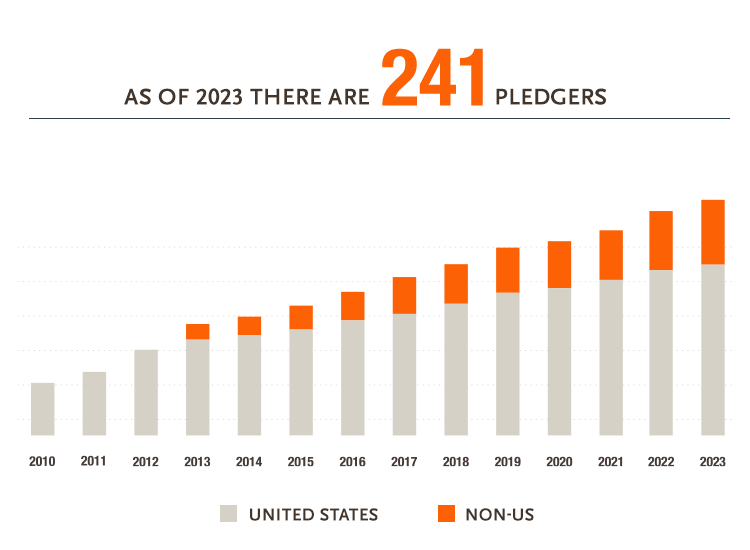


36 states initially did not set up their own exchanges.[0]
It appears that currently, 20 states (including D.C.) have their own marketplace.[1]
>The shutdown prevented anyone from outside the main team working on HealthCare.gov from coming in to help
That government shutdown in 2013 was instigated entirely by one U.S. Senator, Ted Cruz, expressly for the purpose of sabotaging ACA.[2]
[0]https://aspe.hhs.gov/reports/health-insurance-marketplace-pr...
[1]https://www.healthcare.gov/marketplace-in-your-state/
[2]https://www.texastribune.org/2016/02/16/ted-cruz-2013-obamac...