> The planets also are very close to each other. If a person was standing on one of the planet’s surface, they could gaze up and potentially see geological features or clouds of neighboring worlds, which would sometimes appear larger than the moon in Earth's sky.
> In contrast to our sun, the TRAPPIST-1 star – classified as an ultra-cool dwarf – is so cool that liquid water could survive on planets orbiting very close to it, closer than is possible on planets in our solar system. All seven of the TRAPPIST-1 planetary orbits are closer to their host star than Mercury is to our sun.
> The planets also are very close to each other. If a person was standing on one of the planet’s surface, they could gaze up and potentially see geological features or clouds of neighboring worlds, which would sometimes appear larger than the moon in Earth's sky.
this reminds me of one my favorite films ever. it is just four minutes long
It similarly combines HD cinematography with Carl Sagan's narration. It's not CG like this, but the overall quality is extremely high (at least after the first chapter).
This brought me to tears, literally... There is a beauty to the words that is hard to describe other than to say it gives "meaning" (for lack of a better word) to life on this rock.
"The setting for the trilogy is a pair of planets, Land and Overland, which orbit about a common centre of gravity, close enough to each other that they share a common atmosphere."
They don't share a common atmosphere, but I guess the delta required for interplanetary transfer is really low.
I always thought that Firefly's scenario of a bunch of Earth-like worlds in close enough proximity to have regular trading ships flying between them was unrealistic. Now, not so much. This system even fits in with the "Abandon Earth en-mass, move to new set of worlds" backstory.
So, what did J.J. know, and when did he know it? And for that matter, how did he know?
Just making sure, but I hope you know that JJ Abrams had literally absolutely nothing to do with Firefly and wasn't even tangentially related to its creation nor production.
Also, I'm relatively positive that JJ (in the sci-fi works he actually, well, worked on), himself, knew nothing (see Armageddon for sources) and that his script supervisors dealt with any discrepancies with reality JJ had.
Corrections aside, it is an interesting observation that Firefly is less outlandish with this discovery (not a criticism, Firefly is optimized for fun, not scientific plausibility). Still, assuming light speed travel, Firefly's inhabited planets are still a heck of a lot closer, since the crew doesn't seem to noticeably age between the half dozen or so star systems that they visit, and don't appear to have any kind of tech to reversibly[1] halt their metabolisms.
[1] the reversibility it the hard part. Tech for halting metabolic processes irreversibly has been around for quite some time ;)
> Still, assuming light speed travel, Firefly's inhabited planets are still a heck of a lot closer, since the crew doesn't seem to noticeably age between the half dozen or so star systems that they visit, and don't appear to have any kind of tech to reversibly[1] halt their metabolisms.
Closer than what? This system is significantly smaller than Firefly's. Or do you mean closer than this system is to Earth? Don't worry about that, since in Firefly it's one super-system with five main stars. http://i.picresize.com/images/2013/02/06/BMhCv.jpg It's about 55 light hours across.
> Firefly's inhabited planets are still a heck of a lot closer, since the crew doesn't seem to noticeably age between the half dozen or so star systems that they visit
The 'systems' in Firefly are really all one star system. The system includes a central star orbited by planets, four other stars, and a host of "protostars" (they really mean brown dwarves). I've tried, and can't imagine a scenario where, even if such a system could form, that it could be configured in this way. The barycenter of the masses of this system can't possibly remain in the central star indefinitely, for starters. And the whole thing sounds hostile to planets - I imagine them being thrown out of the system constantly. But if you accept that, and you accept travel at some fraction of c, then you wouldn't expect them to age much like they would traveling between systems.
The Firefly system is one in which stars are orbiting stars are orbiting stars, and among these stars are many many planets and moons. Presumably the distances involved here can be traveled in a matter of days or weeks at some fraction of c. So, they're fairly close.
In contrast, Proxima Centauri orbits from a distance of about a quarter lightyear, and we've found a single planet orbiting very tightly. We've also found a single planet around Alpha Centauri B, also orbiting very closely. There may be more we haven't found, but probably not nearly as many as in the Firefly system. Firefly seems to use the idea that more stars mean more planets, but more stars and planets during formation means more chaos, more things to swallow up or rip apart planets, and more mass to throw them out of the system.
I don't think the Firefly system is necessarily impossible. You can even construct models such that the white star is at the focus of all other orbits (you know, if you're the Alliance and you need to do that for political reasons). (An Earth-centric model of our solar system needn't necessarily be wrong in terms of its ability to predict the position of bodies in the solar system - It's just needlessly difficult and convoluted.) I just think the Firefly system is highly improbable.
> assuming light speed travel, Firefly's inhabited planets are still a heck of a lot closer, since the crew doesn't seem to noticeably age between the half dozen or so star systems
If you travel at light speed from your own point of view you arrive instantly due to time dilation, so even if it takes years according to an outside observer (because the distance you're travelling is light years) you wouldn't age at all.
From a photons point of view, it is emitted and absorbed by its destination instantly.
Ah, yes. Forgot all about time dilation effects. In my defense, it was a pretty off the cuff response. Also, I would assume they aren't meant to be literally traveling at exactly light speed, but I don't know the relevant equations to figure out how that impacts my comment. Clearly, in this area, I'm a dilettante at best.
>Still, assuming light speed travel, Firefly's inhabited planets are still a heck of a lot closer, since the crew doesn't seem to noticeably age between the half dozen or so star systems that they visit
My understanding is that Firefly does not have FTL travel at all, in fact that makes it rather unique among spaceship sci-fi. Also, they're in a single (though very large with multiple stars) system. They get around quickly because their ships are a lot faster than our slow-ass chemical rockets, but they're still traveling at sublight speeds, which is why it takes days or weeks to get places, instead of mere minutes (for example, at lightspeed, it would take less than 6 hours to get to Pluto). Notice that, in the show, they took paying passengers, and it took a fair amount of time to get between the "outer worlds". It was a lot like cargo ships of yesteryear, rather than modern airplanes, as far as travel time. They don't have tech to halt their metabolisms for the same reason we don't: they haven't invented it yet.
I'd be more inclined to ask why it worked for you in that exact version, but not for me in the very same one. (Mine might be 64-bit, but I can't see that making a difference here.)
I don't see many people using Edge. I mostly don't have any problems now that it has extensions for ad block and lastpass. Sometimes opening a new tab just mysteriously doesn't work (it sits with the tab open doing nothing) or the website barely works without Edge freezing up (CarMax.com).
One of the games I'm working on (a sci-fi mech and space combat action rpg) actually is set in a solar system like this. Cool to see one in reality relatively close by! I think it provides a lot of interesting situations allowing for basically a "space opera in a solar system".
You get a lot more crazy worlds in written sci-fi. You can start with the Culture orbitals, some of the Commonwealth Saga worlds or Alastair Reynolds' inhibitors. If you count a neutron star with life on it, you get dragon's egg which is a must-read.
At that distance, gravity must be really fun. Tides are not only for water, such tides can also change the height of mountains, the balance of high-rise buildings, infer on volleyball rules, make you fart because of changes in atmospheric pressure, or... be leveraged to generate electricity. Those guys have simili-infinite energy at human scale.
Would they? I mean, we can see geological features on our moon, and our tides are orders of magnitude away from being rock-tearing events. I mean, the moon is small, but... how close do these planets approach, anyway?
The moon is not that small, it is 27% of earth's size. Any other satellite in the solar system is way smaller compared to the planet they orbit. I dare to say that earth and moon are twin planets instead of a planet and a satellite.
Unless you are excluding Pluto deliberately for not being "a planet", its moon Charon has half the diameter of Pluto. They are even both orbiting a common center of gravity outside Pluto.
One of my scale numbers is, everything between Jupiter and the Sun masses less than 2 Earths -- Venus, Mars, Mercury, the Moon, and all the asteroids mass less than the Earth.
And only just barely! You get to around 99% of the Earth's mass with the rest of the inner solar system.
All of the other rocky bodies in the solar system give you another 10% of Earth's mass out to Pluto and another 10% beyond.
>One of my scale numbers is, everything between Jupiter and the Sun masses less than 2 Earths -- Venus, Mars, Mercury, the Moon, and all the asteroids mass less than the Earth.
Is that correct? Venus alone is about 90% the size of Earth, and Mars roughly 33%. It really seems like all those bodies put together should be greater than 1 Earth mass (but less than 2 Earth masses).
Venus is about 81% Earth's mass, and Mars is only a little over 10%. Mercury gets you another 5.5%, the Moon (as above) another 1.2%, and the asteroids are negligible.
In the outer solar system, it's basically all the Galilean Moons + Titan.
ETA: Hmm, or maybe those are surface gravity numbers you're thinking of?
Yep, I was roughly equating mass with surface gravity, which I see now is incorrect.
I do find it really interesting and a little mind-boggling that the Moon, as huge as it is, with a good 1/6 of Earth's gravity, only has 1.2% of Earth's mass. Same with Mars: a good 1/3 of Earth's gravity, but a mere 10% of its mass. I really thought there'd be more direct correlation between mass and gravity than that. Of course, surface gravity is related to mass with both density and radius, but still, I would have assumed that the densities of these bodies would have been rather similar, as they're all small, rocky worlds.
The densities do vary by almost a factor of 2 (~3 g/cc for the Moon, 5.5 g/cc for the Earth), but the larger problem is that surface gravity is a linear function of the radius, and mass is the cube of the radius.
Consequently, the mass of an object with a given surface gravity is inversely proportional to the square of the density. If the Moon were the same density as the Earth, and had the same surface gravity as it does now, it'd actually mass less than it does now -- and Uranus, despite have 15x the mass of Earth, has a lower surface gravity, because its density is so low.
The rule of thumb for space is "any way your intuition can be wrong, it will be wrong". :-)
Gas giant cores are weird. Based on models of solar system formation, we're like, pretty sure they started with rocky (or icy) cores that were dozens of times bigger than Earth. But we're not sure they're still there.
Due to the intense conditions inside a gas giant, we're not sure if they still have a rocky core, or if the cores have liquified or even convected away to mix with the gasses.
So the answer could be "there are dozens of times the Earth's mass worth of rocky material inside gas giants" or "there is no rocky material inside gas giants", or anywhere in-between. We need more detailed study of the gas giants before we can answer that question.
Models of solar system formation also suggest the Kuiper belt started with dozens of times Earth's mass, but we only see about 10% there now, and we only have pretty good guesses about what happened. (I mean, it almost certainly got ejected, but the "why" is harder.)
Thanks. I asked because searching seemed to be telling me that we have only theoretical arguments about gas giants' cores. That surprised me at first, but then I realized how little data we probably have. Basically, mass and its distribution, plus spectroscopic data about surface composition, right?
Close enough that the perturbations these planets induced in one another's orbits allowed the team to estimate their masses at between 0.4 and 1.4 Earth-masses. In astronomical terms, that's very close.
One of the callers (a biologist, so not a crackpot) on TV suggested that given how close the planets were, he wondered if it were possible for there to be cross contamination between the planets given how close they are to each other. He referred to them being part of the same "ecosystem." I'm not sure how feasible that is as a non-astrobiologist, but it is an interesting idea.
Roughly quoting Neal de Grasse Tyson: Since so many bacteria survive outer space there is a good chance it's because of - yes - survivor bias. If only because early earth was bombarded so often that fragments of the planet with microbes took of in a meteor strike and returned home after a while in space.
Sure, I was referring to the part where the microbe survives the initial blast, the passage through space, reentry, and landing, and happens to land in a spot where it can survive.
I know enough biology to be skeptical of papers like that (although, I admit I was skeptical when papers from the 50s predicted interplanetary mass transport, and didn't change my mind until we found Martian meteorites). I'd like to see actual evidence of this.
I actually think the rock getting into space with the microbe embedded in it is not that unlikely (many rocks in the earth are laced with bacteria), nor the space transport. I think the excessive heat of rentry, the force of impact, and the difference in target ecosystems are what are going to kill the microbes.
Possible, but cross-section for collision is way way smaller in the Earth-Mars system. Cross-section goes as r^-2 so the closer the bodies, the 'way better' it is.
Considering the time scales involved, it wouldn't surprise me if multiple planets around nearby stars happened to be seeded with earth based bacterial/archaea life.
One of the presenters is an old friend from college. Folks were offering him money to mention "Zod, our Galactic Overlord" on the air. I guess that didn't happen?
There has been and continues to be cross-contamination between Venus, Earth, and Mars, so it seems likely that planets much closer together, and passing each other more frequently would have more 'communication' of materials.
Gene Wolfe mined this idea for some of his science fiction works, except it was alien life making the jump ... Fifth Head of Cerberus & Blue's Waters/Green's Jungles.
Even if bacterial material were being transferred all the time, I think it'd be a stretch to call them the same "ecosystem" unless they were actually reliant on each other. But I'm not an biologist either.
As these planets are most probably TIDALLY LOCKED, making it hard for LIFE to thrive.
> All seven of TRAPPIST-1's planets orbit much closer than Earth orbits the Sun. A year on the closest planet passes in only 1.5 Earth days, while the sixth planet's year passes in only 12.3 days
>Tidally locked planets likely have very large differences in temperature between their permanently lit day sides and their permanently dark night sides, which could produce very strong winds circling the planets, while making the best places for life close to the mild twilight regions between the two sides.
> Another important consideration is that red dwarf stars are subject to frequent, intense flares that are likely to have stripped away the atmospheres of any planets in such close orbits.
> If a person was standing on one of the planet’s surface, they could gaze up and potentially see geological features or clouds of neighboring worlds...
The challenging thing about Melancholia isn't "boredom" but the shaky camera work in the first half of the movie. I turned it off in disgust after 30 minutes or so. No idea why I went back and watched the rest of it, but I'm glad I did. One of those films that sticks with you.
Other awesome facts, the closest star in the habitable zone might have a "year" of a day and a half, and the furthest out in the zone, a "year" of 20 days.
> are there...hazards simply due to the proximity of a dim star
Tidal locking [1]. Similar to how our moon shines at us ass first all the time, the planets around TRAPIST-1 would be expected to have one face locked to their star. Instead of an equatorial belt bookended with loops of temperate zones, as we have on Earth, we should expect, climatically, an "equatorial" face and a "polar" face separated by a tropic-to-temperate transition area.
Of course, #askNasa didn't win me a question, but could any astrobiologists comment on this question: Tidal locking means the planets would always have a side facing the star, leading to very different thermodynamics in terms of climate and weather on the planet, not to mention radiation. Doesn't that very much hurt the chances for life on those planets?
The debate rages. The problem is that one side of the planet is essentially exposed to space and thus tends to be at cosmic background temperature, and the other side exposed to the star. It is thought by a lot of people that anything volatile enough to be a gas, ever (so, including water), would rapidly end up migrating over to the frozen side, so even if the planet started with the right mix of water and whatever other volatiles are needed it would shortly not have any in the temperate range. Some have objected that the planet could wobble and periodically unfreeze some of that stuff, and maybe life could exist in a resulting narrow temperate zone. My personal feeling is that it would still far-too-rapidly simply freeze out again, this time out of reach of the wobble, so the parched zone would simply grow to include everything ever touched by the sun rather than forming a stable temperate zone.
But we won't really know until we go look at a planet like this, because we don't have one locally to look at. (Plenty of tidally-locked bodies, plenty of bodies with volatiles and enough energy to keep them moving, I'm pretty sure nothing in the Solar system with both.)
Oceans can move a lot of heat around a planet, so the cold side could stay well above freezing. Remember it's T^4 so cold areas radiate far less heat.
That said, if there where minimal atmosphere then the effects your talking about become a larger issue. Atmosphere is largely a function of solar wind and volcanic activity which relates to the isotopes in a planets core making this hard to predict.
If water freezes on the dark side, moisture in the atmosphere would probably move from warm to dark side and fall down permanently as a snow gradually removing liquid water.
If the oxygen and nitrogen freezes and snows down in the dark side (-220 C or so), the warm side can't have atmosphere either.
Unless there is some way tidally locked planet can have stable air or sea convection between the sides. I don't think they have.
I think one idea is large mountains on the dark side and the water slides back down as a glacier that melts, and eventually vaporizes, and back in a circle.
You have to watch out though - make your mountains too high, and you shift your center of gravity, and now your mountains are no longer elevated.
So if the water and gasses migrate to the cold side, I wonder if that would eventually make the cold side heavy enough to be rotated towards the star, causing the planet to periodically(probably over several millenia) reverse the side facing the star.
You're thinking of Earth, where the polar ice builds up perpendicular to the sun, causing tidal effects to wobble our axis a bit.
In this case, the ice is building up in such a way to make the planet even longer in the direction that tidal locking already had elongated it. The effect of which is that tidal locking would get stronger; not weaker.
I don't think it matters too much that it'd be icy on one side and rocky on the other; I think it matters more that it's oblong. But even supposing it does matter, if your intuition is that the more-dense end would want to fall towards the star, then that'd be the rocky end; not the icy end. Yes, the icy end got heavier supposing you measure from the rocky planet's center. But if you shift your frame of reference to be the planet's center of mass, then both halves of course kept exactly 50% of the mass; the densities are what shifted.
Any heat source exposed to space has the basic problem of its volatiles running away and not coming back. On geological time frames, this effect is probably nearly instant, so it isn't very helpful that maybe a new volcano could pop up somewhere and melt lots of stuff or something, because all that does is put a hole in the permanently frozen layer. Any heat source not exposed to space might harbor life, but that's not particularly true of these planets; we already have things like Europa locally with the same possibility.
The issues with valuable resources running away and not coming back is a serious one even for Earth, which I think might surprise some people. The geological carbon cycle [1] in particular is one that may surprise people who have not encountered it before, or not thought about it in terms of extraterrestrial life. On geological time scales it's surprisingly easy for entire important elements to go find themselves a low-energy configuration they like and disappear from any putative biosphere. The issues with a tidally-locked planet providing such solutions to "all gasses liquids" is merely an extreme example of the case, and really makes one wonder how it would be possible for such a planet to stay "stirred" enough for life to have access to what it needs to develop.
The link you provided suggests that one of the main ways for carbon to enter the atmosphere or ocean is through volcanic eruptions and geological hot spots. Isn't increased geological activity one of the results of orbital resonance?
If the 'central' planet has 6 close neighbours of equivalent size in resonant orbits would this not provide a very large amount of 'stirring'? These planets are also much more massive than Europa which is only 0.008 times the mass of the Earth compared to ~.6 and ~1.3 Earth masses for the ones in the habitable zone. They may have a more substantial mantle and core, possibly global magnetic fields and definitely more gravity to hold on to any fugitive gasses.
Considering geological timescales, this system is also billions of years younger than our own, potentially only a little over 500 million years old. The processes you draw concern to may simply not have had time to play out yet.
I'm also not convinced that the atmosphere would be cold enough to freeze out gasses on the night side if there were significant oceans or enough atmospheric circulation to transfer heat from the day side.
I know people have tried. I believe you can get both results if you put the right numbers in. Personally I consider this one of the canonical examples of where a simulation is a waste of time; with absolutely no ability to validate the model against reality, the model is in my humble-but-strong opinion utterly useless, which I mean in the strongest metaphysical sense possible. There's more ways to be wrong than to detect that you're wrong. (That's not just a flippant cute turn of phrase; I mean that as a rather fundamental issue with the entire idea.)
Apparently what would hurt the chance of life in a tidally locked planet the most is that due to being tidally locked the planet would have a reduced magnetic field to protect the atmosphere, and therefore there is a good chance that the planet would lose it's atmosphere over time.
Agreed, but there are other variables involved, including strength of stellar wind, density of atmosphere, whether a magnetic field is induced by the stellar wind, the mass of the planet (strength of its gravity), etc.
Without an atmosphere you can't maintain a surface ocean, because liquid water can't exist in a vacuum. It's possible for the ocean to exist under a crust of ice though. See Europa for an example. So it's still theoretically possible for life to exist in a subsurface ocean, but I think it's a lot less likely compared to a planet with an atmosphere and temperatures that would support liquid water on the surface.
> It's possible for the ocean to exist under a crust of ice though. See Europa for an example.
That's exactly what I was thinking of. :)
> I think it's a lot less likely compared to a planet with an atmosphere and temperatures that would support liquid water on the surface.
Sure, but we have little information on how common life is. We're not even sure there's no life on Europa. If Europa supports life, it may be that (basic) life is somewhat common given certain criteria, and while I agree it's probably more common on planets with atmosphere and your statements were not incorrect, it may be that life is actually fairly likely on a planet like that (which is what I, possibly incorrectly, interpreted your statement as ultimately trying to convey).
I remember reading about 55 Cancri e (1), another tidally locked planet (2) featured in NASA's Galaxy of Horrors as "The Twilight Zone" (3), where life in the boundary seems unlikely.
I don't see why. If anything, life might be even easier if you're constantly getting energy from above, rather than intermittently. In any case, "different climate and weather" doesn't seem to me to imply "hurt the chances for life."
If they're in the habitable zone, then they're getting similar radiation as an organism at the far north latitudes of Earth are getting during the summer. I don't know if it makes that much difference to a short-lived bacteria whether it's full sunlight for several weeks at a time, vs full sunlight forever.
TL;DR is that there may exist a band around the planet where the two zones meet that is habitable. I think it's a reasonable supposition that most of the rest of the planet would be uninhabitable.
Maybe but I like to think there are creatures living in the temperate rim of a tidally locked planet somewhere debating whether life could possibly evolve on a rotating planet.
"I mean, there'd be temperature fluctuations of tens of degrees every day! It would be dark half the time! How could life survive in such an unstable environment?"
It's not a given, though. We used to think Mercury is tidal locked, but that turns out not to be the case. These planets, as I understand it, are in similar orbits, so they may not be locked either.
Well, Mercury is in a tidally locked orbit of sorts. Its rotation is resonant with its orbit -- it experiences two days every three years, and this isn't a coincidence, it's a relatively stable outcome of its tidal forces with the sun.
Fascinating! Also – off topic, but – this description reminded me of Twinsun[1], the planet in the game Little Big Adventure. It remains one of my fondest game memories of that era, despite all its weird bugs. I've thought about finding a copy and playing it again at some point, but I fear it might spoil my good memories of it..
Dammit, why did you have to remind me... Both LBA and LBA2 stand out as extremely memorable from my childhood. It does look like there's a revival of game-styles from that era, given Thimbleweed Park[0], Pathway[1], and apparently 2Dark[2] from (one of?) the authors of LBA. Any more?
This would be my first thought as well, but the original article says that they are near-orbitally resonant. It seems possible to me that the regularly passing nearby planets could apply enough of a torque to counteract the tidal locking---though I don't have a good sense of the order of magnitude of the forces, so maybe not.
Depending on the spectrum of the star, I would be concerned about non-visible radiation doses when in close proximity to the star.
IANA astrophysicist, though.
Actually, adding onto that, I'm wondering whether orbits this tight would result in a noticeable centripetal force -- that is, that you'd feel lighter on the night side of the planet than on the day side.
"Although at least some fraction of each planet could harbor liquid water, it doesn't necessarily follow that they are habitable. TRAPPIST-1 emits about the same amount of X-ray and ultraviolet radiation as the Sun does, which could chew away at any protective atmospheres the planets might have."
But it's complicated. For example, apparently the energetic radiation can help by stripping away the H/He atmosphere. For more, see:
Michael Okuda has raised the question on his Twitter feed of whether the planets would be close enough to the star that tidal force could be an issue---hard to say at this point (in the sense that they're not loose clouds of rocks, so tidal forces haven't sheared them apart, but I'd assume it's unclear whether they might have interesting geological activity, such as frequent earthquakes or unexpected extra heat due to internal friction).
Like others have pointed out, the combination of the planets being tidally locked so only one side gets sunlight and the strong X-ray radiation and flaring from the host star make it considerably un-Earth-like, and harder for life as we know it to develop.
That's backwards. Red dwarfs have extremely powerful flares relative to their luminosity. So much so that it's unlikely that life would survive on the surface of an orbiting planet. (Though life would probably survive underwater.)
That's not quite true. These planets are very close to the star and can receive large doses of the little bit of harmful radiation that the star puts out. Additionally, these planets put out a lot of infrared, but not a lot of higher energy photons, and life-as-we-know-it needs those higher energy photons. That infrared is also absorbed by water in any atmospheres or oceans that are present, leaving even less for life. Finally, these types of stars tend to have rather variable output in their spectrums, which may make it difficult for life to adapt.
Life is more than capable of evolving mechanisms to increase or decrease it's mutation rate. On Earth Eurkaryotic cells with large genomes have developed nuclei to reduce their mutation rate and bacteria are more of a mixed bag with some even deliberately uping their mutation rate above what would be cause by radiation, etc. So in the long run eukaryotic life would just have to waste more resources on mechanisms to resist the effects of the radiation.
That doesn't follow, at all. If we're talking about Earth-like life, then any such life would need protection from radiation to be able to live long enough to reproduce. If such protection wasn't provided by the planet's atmosphere, then life there wouldn't move out of the water. In any case, the mutation rate would need to be extremely low, as it is with Earth life.
Just as interesting is a recent news story about a plan to build an interstellar space ship, propelled by giant solar sails to travel about .2c (20% of the speed of light).
In other words, we could get to the Trappist-1 star system in about 145 years.. practically in the blink of an eye.
Importantly, that means there is basically no way that a civilization that developed on such a planet would not at some point endeavor to travel to those other planets.
You could also argue that a civilization has not succeeded until it is able to completely sever ties with its home planet and venture out into the galaxy on its own. Leaving the nest, so to speak.
maybe them aliens made the system up, so that it doesn't fall apart under its own gravity. Makes sense: just increase the habitable area by bringing in smaller planets into the goldilock zone - that might come out cheaper then to go interstellar.
Maybe lots of planets that circle the same star over the same orbit would be a better indicator of alien activity than a dyson sphere.
Perhaps some of them, especially the innermost. Considering the orbital periods and resonance it seems like this system might be similar to the Jovian or Saturnian systems.
The planets may be tidally locked but there is also a chance they could have a slow rotation similar to Mercury. That planet has also shown us that a magnetic field is possible without a fast rotation so there's a chance of these exoplanets having one as well.
Tidal forces can be a boon to planets with synchronous rotation since they provide an additional source of heating for the side of the planet that faces away from the star. If there is liquid water or a thick atmosphere they may also drive tidal and weather patterns that could help circulate heat from the warm side to the cold side.
Geological activity also 'stirs the pot' when it comes to precursors for life. All this extra energy in the system could mean that even TRAPPIST-1g (outside the habitable zone) might have an atmosphere and oceans.
Wonder how tidal forces from these planets would affect [possible] oceans on their neighbors. Would imagine it would make for quite a perturbed environment.
I am wondering how it could affect our psyche if we were able to gaze on a mirror world with our own eyes in broad daylight. This is the first VR application I would think of: display an Earth like planet in the sky and see how it affects us.


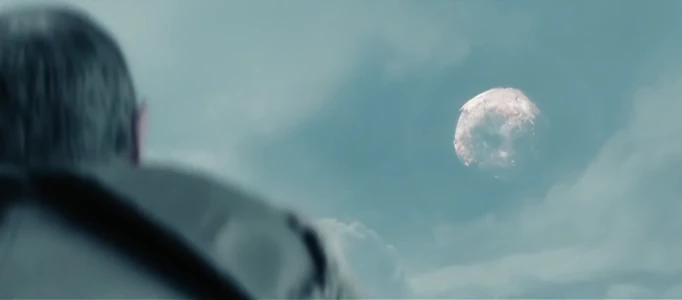


> The planets also are very close to each other. If a person was standing on one of the planet’s surface, they could gaze up and potentially see geological features or clouds of neighboring worlds, which would sometimes appear larger than the moon in Earth's sky.
> In contrast to our sun, the TRAPPIST-1 star – classified as an ultra-cool dwarf – is so cool that liquid water could survive on planets orbiting very close to it, closer than is possible on planets in our solar system. All seven of the TRAPPIST-1 planetary orbits are closer to their host star than Mercury is to our sun.
https://www.nasa.gov/press-release/nasa-telescope-reveals-la...